Feeds:
Posts
Comments
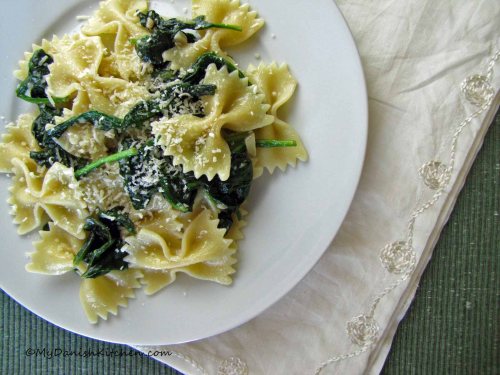
Garlic and Anchovy Farfalle

Garlic and Anchovy Farfalle

Now that the holidays are over and we are settling back into our everyday routines, I think we need something quick and easy on the dinner menu. And this pasta dish is so easy to make, not to mention very delicious. The recipe is from Giada De Laurentiis and I just made some slight little changes. Enjoy!

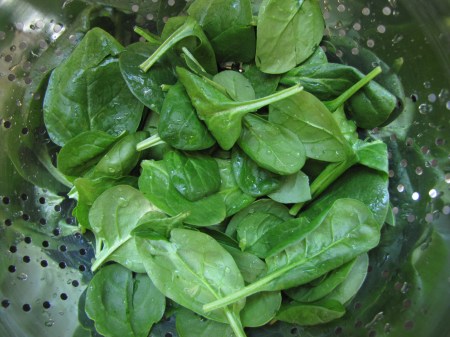
Fresh Baby Spinach

Fresh Baby Spinach

Garlic and Anchovy Farfalle (serves 4-6)

Ingredients:

1 pound farfalle pasta

1/4 cup extra-virgin olive oil

1 tablespoon anchovy paste

1/2 teaspoon crushed red pepper flakes, optional

3 cloves of garlic, minced

5 cups baby spinach leaves (6 ounces)

1/2 teaspoon salt

1/2 cup freshly grated Parmigiano-Reggiano cheese

Directions:

Bring a pot of salted water to a boil, add pasta and cook until tender. Drain and reserve 1 cup of pasta water.

Rinse spinach in cold water, drain and set aside. In a large pan heat olive oil over medium heat. Add anchovy paste, red pepper flakes and garlic, cook for until aromatic, 1-2 minutes.  Add spinach and salt, cook until wilted, about 3 minutes.

Add cooked pasta to pan, add 1/2 of the grated cheese to pasta, add some of the reserved pasta water to pan, if needed, to loosen the pasta. Pour pasta into serving dish and top with remaining cheese. Serve immediately. Enjoy!

Source: adapted from Giada De Laurentiis

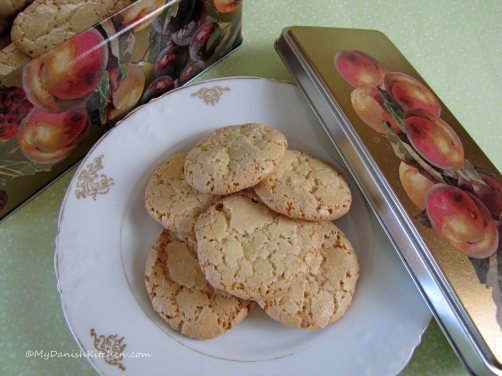
Danish Makroner

Makroner

These are Danish Makroner cookies and I use the word cookie here very loosely. They are not really the kind of cookies that you snack on, well I guess you could, but they are very sweet. These cookies are crispy and airy and they are meant to be crumbled up and used in the making of other desserts such as Danish Æblekage (apple cake), Lagkage (layered cake) or Chocolate Amaretto Pudding.

This recipe calls for Hjortetaksalt which is a common leavening agent used in Denmark. Hjortetaksalt is Ammonium Bicarbonate also called Baker’s Ammonia or Hartshorn. The Ammonia gives a lighter and crispier result but can be substituted with baking powder or baking soda. A word of advise about baking with Hjortetaksalt. Do not keep your head directly over the door when opening the oven because the fumes will be very strong initially when the door is first opened, however there will be no after-taste at all from the Hjortetaksalt in your cookies. I did not have any Hjortetaksalt on hand and so I tried it with baking soda and the result was very good. The cookies were crisp and tasted exactly right. They did not rise much and I am wondering if they would have risen more with the Hjortetaksalt?

Makroner

Ingredients:

100 gram blanched almonds (3.5 oz)

100 g confectioners sugar (3.5 oz)

just a pinch of Ammonium Bicarbonate (called Hjortetaksalt in Danish) or baking powder or baking soda

2 egg whites

Directions:

Line a baking sheet with parchment paper and set aside. Preheat oven to 340 degrees F (170 degrees C).

Place blanched almonds in food processor and blend until a fine powder. Combine ground almonds, confectioners sugar and Hjortetaksalt in a bowl. Beat egg whites until stiff and gently fold into the almond mixture in increments, this may require a bit of patience.

Place teaspoon size dollops of dough onto baking sheet and bake in the middle of oven for 15 minutes. Allow to cool completely on baking sheet before storing in baking tin with a tight fitting lid. Enjoy!

Source: Bente Kilian – Maduniverset

Print Friendly and PDF

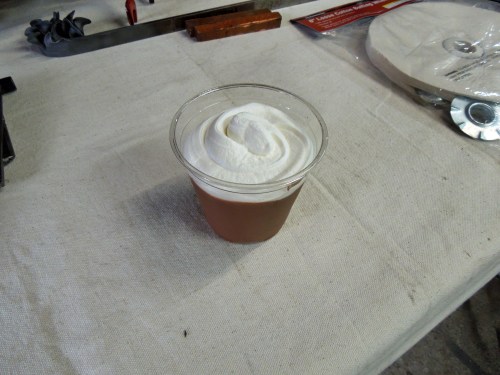
Chocolate Amaretto Pudding

Chocolate Amaretto Pudding

This is a very easy dessert to put together but somehow I managed to make it really complicated. You would think that after all these years living in the US that I would have some sort of sense of how much a liquid ounce is, but nooooo. So I am making this lovely dessert and measuring out the amount of Amaretto. The measuring glass I am using is small with tiny numbers on it and I need approximately 2 1/2 ounces. I see the number 5 and figure I need about half that amount. I go about my business and finish the dessert. Now tasting time, that’s funny, I don’t taste any Amaretto, only delicious chocolate. I then go back and look at the measuring glass again, this time putting on my reading glasses and see that what I thought was a 5 really said .5 🙂 No wonder I don’t taste any Amaretto. Round two, so I make another portion, determined that I want a pudding that is loaded with wonderful Amaretto flavor and the second time around I finally succeeded. This is indeed a lovely, lovely Amaretto pudding.

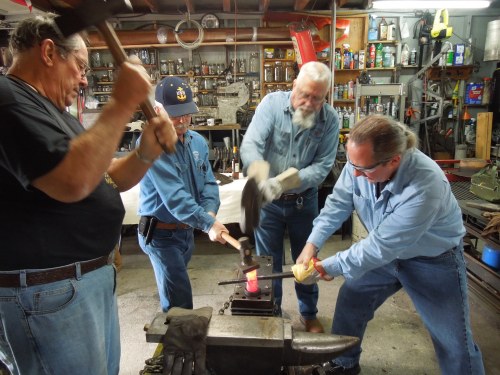
How many Smiths does it take to make a hammer head?

How many Smiths does it take to make a hammer head?

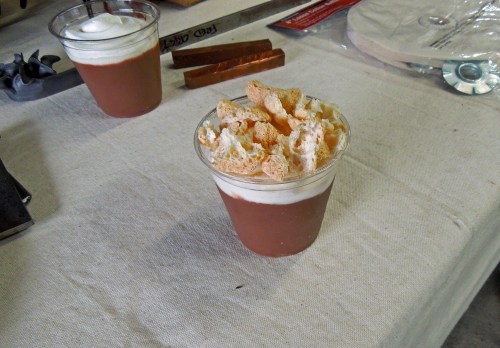
But the story doesn’t end there. You see, this makes 6 small or 4 good size portions and the pudding is to be served for the ABGT blacksmiths and these guys are not small portion kinda guys and I need at least 6 portions. So what’s a girl to do? I want to make some cups with Amaretto pudding and some with the plain chocolate pudding. But my husband suggested that if I mix it all together it might still taste like Amaretto. Big mistake, the wonderful Amaretto flavor has virtually disappeared. Oh well 😦 but it doesn’t stop there. So I send Joe on his way with the pudding only to realize, I didn’t get any finished pictures of the pudding. So the pictures in this blog post is courtesy of my blacksmith husband Joe, which may I add, did an excellent job taking them. Thank you honey 😉

Chocolate Amaretto Pudding

Chocolate Amaretto Pudding

Chocolate Amaretto Pudding (makes 4 to 6 servings)

Ingredients:

500 milliliter whole milk (17 fl oz)

1 tablespoon all-purpose flour

2 tablespoon sugar

1 vanilla bean, seeds scraped out

80 milliliter Amaretto liqueur (2.7 fl oz)

100 gram dark chocolate (3.4 oz), chopped finely

50 gram unsalted butter (1.7 oz)

Topping:

whipped heavy cream, optional

Danish Makroner or Amaretti cookies, crushed, optional

Directions:

Warm milk in a saucepan over low heat. In a second cold saucepan add flour, sugar and vanilla seeds, whisk to combine. Whisk in the warm milk, a little at a time, until smooth. Place saucepan on stove and heat to medium-low stirring frequently. Whisk in Amaretto liqueur and continue to stir until you start to see a slight bubble, remove pan from heat. Add chocolate and butter, continue to stir until it starts to thicken a little. Pour pudding into storage container or serving dishes and chill in refrigerator 4-6 hours before serving. To prevent skin from forming on pudding surface, place plastic wrap directly onto surface before chilling. To serve top with whipped cream and crushed Danish Makroner or Amaretti cookies. Enjoy!

Source: Gennaro Contaldo

Print Friendly and PDF

Norwegian Julekake

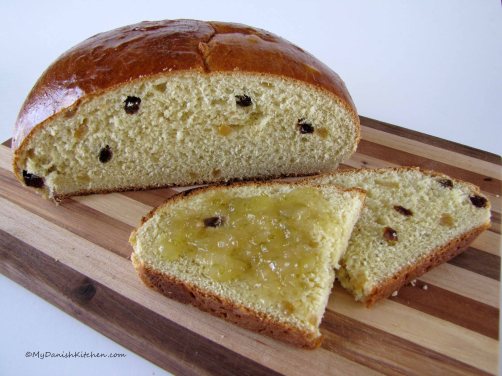
Julekake is a Norwegian Christmas Bread which is really easy to make. The original recipe called for candied citron which I think is what we reffer to as “Sukat” in Denmark. I had neither on hand but I did have candied orange peel which I believe is more or less in the same family. The candied orange peel does render a very unique flavor to the bread, a flavor you either love or hate 🙂 So if your not a fan, you can always just leave it out or maybe replace it with some dried cranberries, yum!

Making Julekake

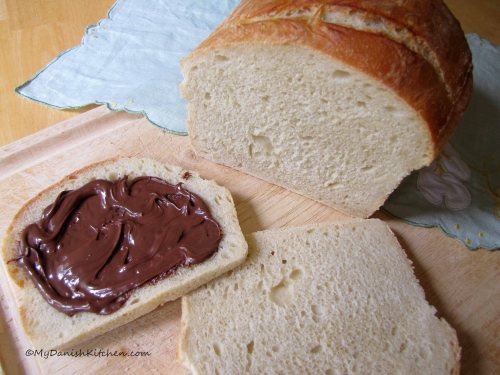
The bread is served either warm or toasted with soft butter or some jam. I would like to point out that the unique candied orange flavor goes really well with Nutella, although I don’t think Nutella would be a traditional way of serving the bread, but delicious nonetheless.

Julekake (makes 1 loaf)

Ingredients:

1/4 cup butter

2 1/4 teaspoons active dry yeast (or 25 grams cake/fresh yeast)

1/4 cup water

1/2 teaspoon sugar

1/2 cup milk

1 egg

1/4 cup sugar

1/4 teaspoon salt

1/2 teaspoon cardamom

2 1/2 cups all-purpose flour

1/4 cup candied orange peel, diced (candid citron or Sukat)

1/4 cup dried cherries

1/4 cup raisins

1 egg, for egg wash

Directions:

Melt butter and set aside. Combine water, 1/2 teaspoon sugar and milk in a small sauce pan, heat to 100-110 degrees F and remove from heat. Sprinkle yeast over warm milk, give a quick stir and let sit 10 minutes. Place fruit in a small bowl with 1-2 tablespoons of the flour, mix to coat fruit with flour, set aside. Pour milk/yeast mixture into bowl of stand-mixer fitted with the dough hook. Add egg, 1/4 cup sugar, salt, cardamom and butter, start mixer on medium-low. Add flour in increments and finally add the fruit. Place dough on flour dusted work surface and knead briefly until smooth. Place dough in a greased bowl, cover with a clean, dry tea-towel and let rise for 1 hour or until double in size. Line a baking sheet with parchment paper and set aside. Give dough a quick knead to deflate and place on baking sheet. Cover dough with tea-towel and let rise for another 45 minutes. Preheat oven to 350 degrees F. Lightly beat egg to make an egg wash. Brush dough with egg wash and bake for 30 minutes. Note: you may need to cover bread loosely with foil after the first 20 minutes of baking to avoid over-browning. Serve warm or toasted with butter or jam. Glædelig Jul and Merry Christmas!

Source: adapted from Mrs. Sig Score

Print Friendly and PDF

Jødekager

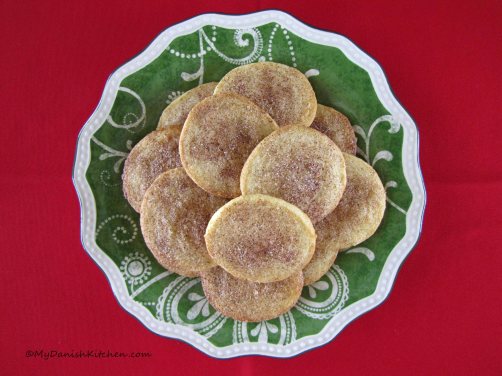
Jødekager is a Danish cookie which was always a part of the traditional Christmas baking at our house while I was growing up. It’s a small round cookie sprinkled with sugar and cinnamon, reminding me of the American Snickerdoodle. There is some confusion as to where Jødekager originated from but most sources believe that the cookies were sold in Jewish bakeries in Copenhagen approximately 150 years ago and I guess that is how they got their name? In any case, they are wonderful little cookies and they are so easy to make. Prepare the dough the night before and then it’s just a matter of slicing, sprinkling and baking, and your kitchen will be filled with the smell of Christmas 🙂

Jødekager

Jødekager (makes 55-60 cookies)

Ingredients:

For the dough:

330 gram flour (11 3/4 oz.)

250 gram butter, cold (8 3/4 oz.)

200 gram sugar (7 oz.)

2 egg yolks

For garnish:

1 egg white

3 tablespoons sugar

1 tablespoon ground cinnamon

Directions:

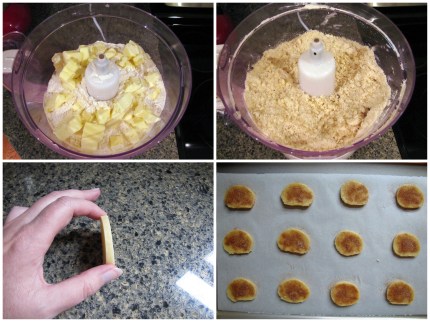
Crumble flour and butter together until it has the consistency of grated Parmesan cheese, this is best done using a food processor. Place in a large bowl and add sugar and egg yolks. Using your hands, knead the dough quickly until dough comes together and it’s homogeneous, careful not to over-knead. Divide dough into 2 or 3 portions and roll each portion into a 2 inch (5 centimeter) log. Wrap each log in plastic wrap and place in refrigerator for 1 to 3 hours or overnight.

Line baking sheets with parchment paper and set aside. Preheat oven to 395 degrees F (200 degrees C).

Lightly beat egg white with a fork to break it up. In a small dish, mix sugar and cinnamon, set aside. Cut logs into 0.2 inch (the thickness of three quarters put together) (5 millimeter) thick slices and place on baking sheet. Brush each slice with egg white and sprinkle a generous layer of sugar/cinnamon mixture on top. Bake in the middle of oven for 5-7 minutes or until golden. Cool on baking sheet for 1 minute before transferring to a baking rack to cool completely. Enjoy!

Jødekager dough rolled into logs

Source: adapted from Claus Meyer

Print Friendly and PDF

Finnish Christmas Stars

This is without a doubt the craziest dough I have ever worked with! When I first read the directions I was a little confused. It was unclear to me if they were asking for 1 1/2 cups of whipping cream or 1 1/2 cups of whipped cream. It turns out you start with 1 1/2 cups of heavy whipping cream which is then beaten into whipped cream with soft peaks. As I went on making this dough I had some serious doubts about it. When the dry ingredients are mixed with the whipped cream it becomes crumbly and then when the soft butter is worked in it becomes sticky. It does however set up nicely in the refrigerator. Finally when the dough is rolled out, make sure your work surface is floured very well. At this point the dough becomes very easy to work with and rolls out beautifully. If you are unfamiliar with the rolling and folding three times procedure it is basically the same as if your making Wienerbrød or Birkes although this is not a puff pastry dough and you can read and see more pictures of the folding process on those two pages.

The final outcome was a beautiful star shaped cookie, tender and buttery with a delicious sweet, yet tangy, prune center. The cutting and folding of the cookies is a fun process which would be a great activity with older children. The Joulutortut cookies were definitely worth the effort!

Joulutortut – Finnish Christmas Stars (makes 30 cookies)

Ingredients:

For Prune Filling:

5 oz. pitted prunes

water to cover prunes

1 tablespoon lemon juice

1/4 cup sugar (2 oz.)

For the dough:

2 cups all-purpose flour (24 oz.)

1 teaspoon baking powder

1 1/2 cup heavy whipping cream (12 0z.)

1 cup butter, at room temperature (8 oz.)

For finishing:

1 egg, beaten, for egg wash

Pearl sugar, for sprinkling

Directions:

Place prunes and water in a small saucepan and simmer until prunes become very soft, 15-20 minutes. Pour prunes, lemon juice and sugar into a blender and puree. Set prunes aside to cool.

Prepare baking sheets with parchment paper, set aside.

Sift together flour and baking powder, set aside. Measure 1 1/2 cups heavy whipping cream, beat whipping cream until it starts to thicken (soft peaks). Using a spatula, add flour to whipped cream, mixture will be crumbly. Now using your hands, work the soft butter into the mixture until well combined, the dough will be sticky. Wrap dough in plastic wrap and refrigerate for 1-2 hours.

Preheat oven to 200 degrees C (390 degrees F)

Making sure your work surface is well floured, roll the dough out to a rectangle. Fold dough into thirds, rotate dough a quarter of turn and fold into thirds again, making a small square. Turn over dough. Repeat rolling and folding another two times. Finished rolled out dough should be 15×18 inches, trim off edges to get straight lines. Measure and cut dough into 3 inch squares. Then make small cuts in towards the middle of each square. First move each cut square onto baking sheets, then place a small teaspoonful of prune filling in the center of each square. Fold every second corner into the middle of each square, creating a star shape. Brush with egg wash making sure the center gets a good amount of egg wash to prevent the star from opening up during baking. Sprinkle with Pearl sugar (or regular caster sugar). Bake for 10 minutes or just until golden. Cool on baking sheet for 1-2 minutes before transferring stars to a cooling rack. Enjoy!

Source: The Great Scandinavian Baking Book

Print Friendly and PDF

Orange Cranberry Bread

Orange Cranberry Bread

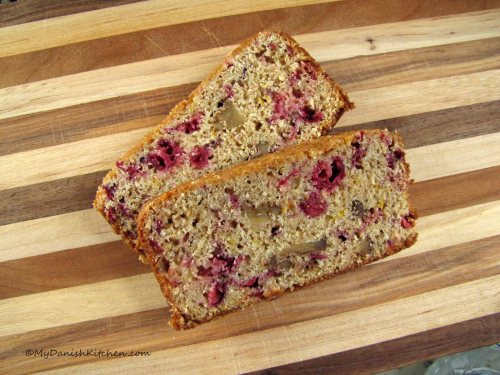
I have been looking to change-up the holiday table a bit. I am big on traditions but there’s always room for minor improvements. Cranberries definitely belongs on the table, but serving cranberry sauce which no one in our household seems very fond of anyway, just doesn’t make sense.  So I was looking for an alternative when I came across this wonderful recipe. The only minor change I made was to toss the chopped cranberries in a little confectioners sugar to take away some of the bitterness of the berries. The bread turned out sweet and tart with a subtle background flavor of orange and a little crunch from the walnuts, very delicious. A nice addition to my holiday table.

Cranberry Bread (makes 1 loaf)

Ingredients:

165 gram all-purpose flour (5.8 oz)

135 gram whole wheat flour (4.75 oz)

200 gram sugar (7 oz)

1 small teaspoon salt

1/2 teaspoon baking soda

1 1/2 teaspoon baking powder

35 gram unsalted butter, melted (1.15 oz or 2 1/2 tablespoons)

1 egg, beaten

177 milliliter orange juice (6 oz or 3/4 cup)

1 tablespoon orange zest (zest from 1 medium orange)

50 gram walnuts, chopped (1/2 cup) – optional

160 gram fresh cranberries, roughly chopped (1 1/2 cups)

2 tablespoons confectioners sugar

Directions:

Preheat oven to 350 degrees F (176 degrees C). Grease a 9 x 5 inch loaf pan (22 x 12 cm), line bottom of pan with parchment paper and set aside.

Give cranberries a rough chop, add confectioners sugar, stir to combine and set aside.

In a medium bowl combine both types of flour, sugar, salt, baking soda and baking powder. Add melted butter, egg, orange juice and orange zest, stir until blended. Add walnuts and cranberries, stir until evenly distributed. Pour batter into loaf pan and smooth the top. Bake for 45 to 55 minutes or until a toothpick inserted into the center comes out clean. Cool in pan for 15 minutes, then remove from pan and cool completely on wire rack. Enjoy!

Source: adapted from Wild Yeast via Ocean Spray

Print Friendly and PDF

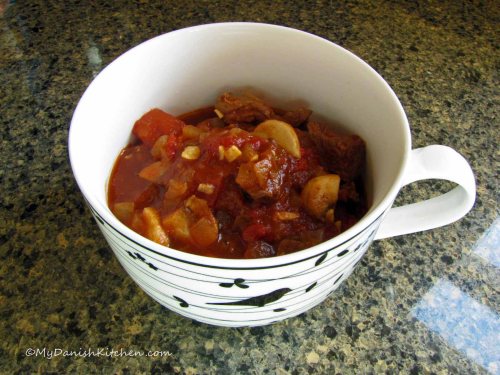
Beef Stew

Beef Stew

Beef Stew

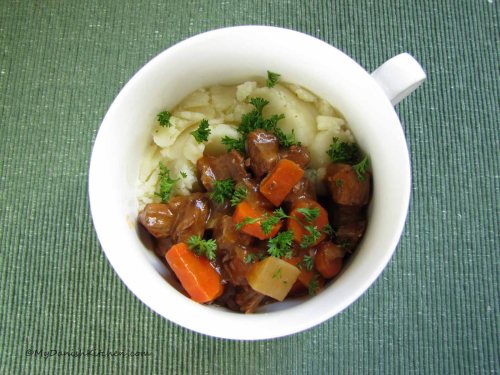
When the weather turns cold and gloomy there is just nothing better than warm food that’s been simmering in a pot for a couple of hours. Light some candles and create some “hygge” (coziness) and enjoy your stew with mashed potatoes. There, I am ready for winter hibernation.

Beef Stew

Ingredients:

2 lbs chuck beef, cut into bite size pieces

Salt and Pepper

Extra Virgin Olive Oil, for frying

1 whole medium onion, diced

2 cloves of garlic, chopped

4 oz tomato paste

1 quart chicken stock

several dashes Worcestershire sauce

1/2 teaspoon sugar

4 carrots, peeled and sliced

1 large turnip, peeled and cubed

Directions:

Season beef cubes with salt and pepper. Heat cooking pot to medium-high heat, add olive oil and brown beef in small batches on all sides, remove beef to a plate and set aside.

Lower heat to medium, add onions and cook until translucent. Add garlic and cook for another minute. Add tomato paste, stir to combine and cook for another 2 minutes. Add chicken stock, Worcestershire sauce and sugar to cooking pot. Add beef cubes back into stew, reduce heat to low and simmer covered for 2 1/2 to 3 hours.

After 2 1/2 to 3 hours add carrots and turnips, simmer covered for another 30 to 40 minutes. Adjust taste with salt and pepper. Serve with mashed potatoes and enjoy!

Source: adapted from Pioneer Woman

Print Friendly and PDF

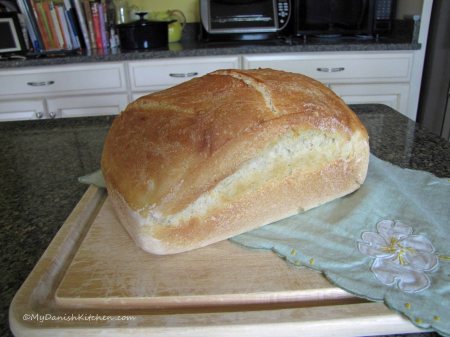
Hvedebrød aka Franskbrød

Hvedebrød aka Franskbrød

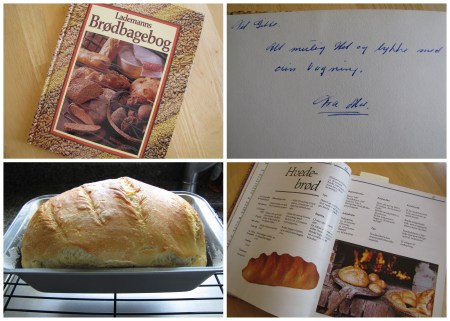
When my parents learned that I was going to move all the way to America, my mother gave me this wonderful baking book. This book has so many wonderful recipes in it and I have read the book from cover to cover many times. But imaging that in the past 27 years I have been living in this country, I have never actually baked a recipe from it…until today 🙂 The excuses as to why not, are many but the main one has always been conversions. Well by now I am finally comfortable with metric to US conversions and so I picked up this great book once again and decided that the time had finally arrived.

Lademanns Brødbagebog - a gift from my mother

Lademanns Brødbagebog – a gift from my mother

I wanted to pick something very familiar that I grew up with and Hvedebrød, aka Franskbrød as we called it, was always my favorite. I know that this bread is probably very outdated since today’s popular breads tend to be very healthy and loaded with seeds and different types of whole flour but this Franskbrød still holds a special spot in my heart ♥

Hvedebrød aka Franskbrød

Hvedebrød aka Franskbrød

Ingredients:

1/2 liter water (5 deciliter or 17 fluid ounces)

2 1/4 teaspoons active dry yeast (or 25 gram cake/fresh yeast)

1 teaspoon sugar

2 teaspoon salt

750 gram all-purpose flour (25.5 ounces)

Directions:

Heat water to 100-110 degrees F (37-43 degrees C). Sprinkle active dry yeast over warm water and give a quick stir, let sit for 10 minutes. Pour water/yeast mixture into mixing bowl, add sugar and salt. With the mixer on medium-low add flour in small increments, you may end up holding back a little of the flour . Mix until dough starts to let go from the sides of the bowl. Place dough into a clean bowl sprinkled with a little flour and cover with a clean, dry tea-towel. Place in a warm location and let rise until double in size, approx 45-55 minutes.

Spray a 9 x 5 x 3 inch baking pan with baking spray and dust pan with flour, set aside. Sprinkle work surface with a little flour and give dough a quick knead to deflate. Shape dough into a log and place into prepared baking pan. Cover with tea-towel, place in a warm location and let rise for another 20 minutes.

Preheat oven to 390 degrees F (200 degrees C). Fill an oven-proof bowl with hot water and place in oven on the lowest rack.

If desired, once the dough has risen, cut slits into dough with razor blade or a very sharp knife. Brush top of dough with a little milk or water. Place dough on the middle rack in oven and bake for 35-40 minutes. Bread is always best when eaten fresh but is also very good 1 or 2 days old and toasted. Enjoy!

Source: Lademanns Brødbagebog

This post has been submitted to YeastSpotting

Print Friendly and PDF

Delicious Æblekage

Delicious Æblekage

I am really enjoying this wonderful Fall weather we are having here in Virginia Beach. It’s raining, as I am typing up this blog post and I love the sound of rain drumming on the roof. What goes perfectly with a day like this? Danish Æblekage (Apple Cake) of course. And this cake is a perfectly wonderful, super delicious cake. It’s easy to make and it will fill your house with the aroma of baking apples and cinnamon. Bring on the season 🙂

Add apples, sprinkle with cinnamon sugar, pour batter, add more apples, sprinkle with cinnamon sugar and bake.

Add apples, sprinkle with cinnamon sugar, pour batter, add more apples, sprinkle with cinnamon sugar and bake.

I had to do a few minor adjustments to this cake. The original recipe called for a 28 cm (11 inch) spring-form pan which I did not have, so I used my 23 cm (9 inch) pan instead. The cake piled up nice and high but I had to adjust the baking time to make sure it was baked through. I also placed a piece of foil loosely over the cake the last 10 minutes of baking to prevent it from browning any further. It turned out fabulous.

Æblekage – Apple Cake

Ingredients:

250 gram butter (8.8 ounces), room temperature

250 gram sugar (8.8 ounces)

4 large eggs, room temperature

250 gram flour (8.8 ounces)

1 teaspoon baking powder

4 teaspoons vanilla sugar

6 large red apples

5 tablespoons sugar

3 teaspoon cinnamon

Directions:

Line a 9 inch (23 centimeter) spring-form pan with parchment paper and set aside.

Peel and core apples, cut into quarters and then slices, set aside. Preheat oven to 350 degrees F (180 degrees C).

In a large bowl beat butter and sugar until thick and smooth. Add eggs one at the time, beating well after each addition. Add baking powder and vanilla sugar to flour. With mixer on low speed, add flour mixture to wet ingredients and mix only until combined.

Stir together the 5 tablespoons of sugar with the cinnamon, set aside. Line bottom of baking pan with 1/2 of the apples, sprinkle with 1/2 of the sugar/cinnamon mixture. Pour batter over apples and smooth batter to edges of pan. Add remaining apples on top on the batter. Sprinkle remaining sugar/cinnamon mixture on top of apples.

Bake cake for 1 hour and 25 minutes or until set in the center. I placed a piece of tinfoil loosely over top surface of cake for the last 10 minutes to prevent further browning. Let cake cool completely on a baking rack. Serve with a dollop with whipped cream or ice cream. Enjoy!

Source: adapted from Beretninger fra et autentisk landbrug

Sweet apples

Sweet apples

Print Friendly and PDF