Feeds:
Posts
Comments
Best Kranskage

Best Kranskage

I was making Kransekage again the other day and decided to try a new recipe. It turned out to be the best tasting Kransekage recipe I have come across so far. It is less dense than the Kransekage I posted about earlier, the dough is softer so you can pipe it out and the finished product is slightly more “cake-like”. That being said, if you intend on making a Kransekage tower like I did for our 25th wedding anniversary, I would not used this recipe because it does not hold its shape as nicely as the other recipe.

Pipe marcipan out with a large plain round tip and shape into triangle.

Pipe marcipan out with a large plain round tip and shape into triangle.

The original directions asked you to pipe it out using a triangular tip, which I don’t have. So I used a large round plain tip (#809) instead and shaped the marcipan into it’s classic triangular shape with my wet fingers. When you do this, careful not to use too much water on your fingers and keep rinsing and wetting your fingers to avoid the marcipan from sticking. Also the Kransekage cookies seemed to brown faster than the other Kranskage recipe so keep a very close eye on them (lower your oven temperature by 10-20 degrees, if needed). And finally, the original recipe called for Odense Bagemarcipan which I am not able to get here in the US so I used my regular Odense Original 60 % almonds (used to be called Ren RĂĄ marcipan). These cookies are really wonderful and I hope you enjoy them. 🙂

Best Kransekager

Best Kransekager

Kransekage (makes 15 pieces)

Ingredients:

For Cakes:

250 gram Odense Original marcipan (used to be called Ren RĂĄ)

125 gram sugar

55 gram pasteurized egg whites

For Glaze:

40 gram confectioners sugar (sifted),( plus more if needed)(1.4 oz)

15 gram pasteurized egg whites(0.5 oz)

For the chocolate:

55 gram bittersweet chocolate

Directions:

Double up two large baking sheets for extra insulation to avoid burning the bottom of cakes. Line baking sheet with parchment paper. Preheat oven to 390 degrees F (200 degrees C).

For the cakes: Pour egg whites into a small dish and add sugar, stir and let sit for 30 to 60 minutes. Using your stand-mixer fitted with the paddle attachment, cut the marcipan into smaller pieces and add egg whites/sugar mixture, beat until you have a completely smooth mass without any lumps (5+ minutes). Scrape dough into a pastry bag fitted with a large plain round tip and pipe out logs onto baking sheet that are finger length (about 8 cm/3 inches). Wet your fingers with a little water and gently press each log into a rounded triangle, continue to wet fingers as needed but careful not to get marcipan too wet. Bake for 14 to 18 minutes or until golden.  Allow to cool completely.

For the glaze: Beat together confectioners sugar and pasteurized egg whites on high-speed for at least 5 minutes. The glaze should be pretty thick and no longer flow together when beaters are stopped, add more sifted confectioners sugar if needed. Load glaze into a plastic bag and snip off tip to create a very tiny opening. Begin decorating, moving the tip back and forth across the logs making sure to extend the tip out over the edge to allow the glaze to droop down the outside in a loop style fashion. Allow glaze to dry completely before dipping ends into chocolate.

For the chocolate: Chop chocolate into small pieces and melt over a water-bath of gently simmering water. Dip each end of Kransekager into melted chocolate and place on baking sheet. Allow chocolate to set (to speed up this process place Kransekager in refrigerator for 10 minutes, take out and bring back to room temperature. Store Kransekager in an airtight container. Enjoy!

Source: Odense

Print Friendly and PDF

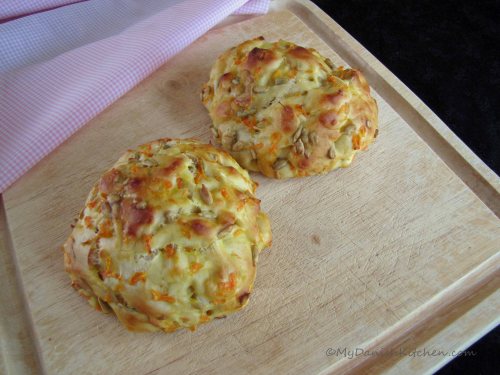
Gulerodsbrud

Gulerodsbrud

My sister Jonna is the one who brought this wonderful recipe to my attention. She shared pictures of her finished Gulerodsbrud on Facebook and it sounded and looked so good that I just had to try the recipe right away. And let me tell you, these rolls did not disappoint. Taste one of these rolls straight out of the oven, as is, it’s a little piece of heaven. Let them cool and you can serve them with butter, or my favorite way, with some ham and prosciutto.

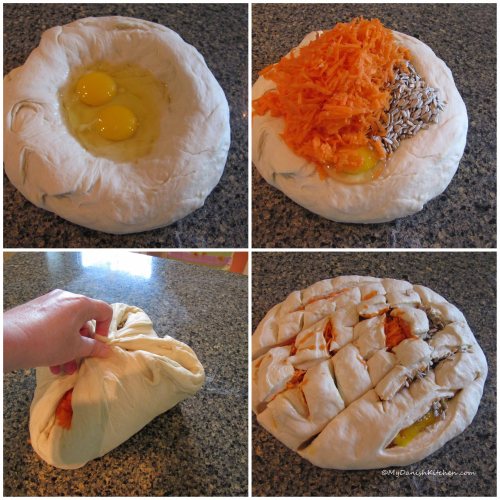
Making Gulerodsbrud

Making Gulerodsbrud

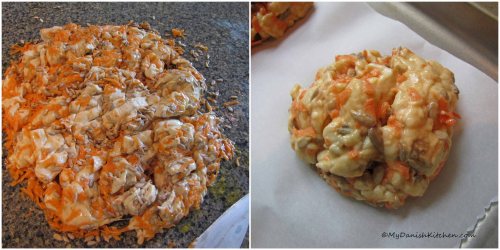
Not only are these buns now one of my favorites but making them is quite an adventure. I have never encountered a process like this and it was a lot of fun. First you make your dough, it’s firm and elastic. Then you make a well in the center and add eggs, sunflower seeds and grated carrots. Wrap it up like a nice little present and then you chop up the dough until it’s in small pieces. Now it’s a real sticky mess and you make little piles of dough on your baking sheets, bake and voila…you have super soft, delicious rolls with a slight thew from the sunflower seeds. I hope you enjoy these as much as I did.

Chop dough into small pieces

Chop dough into small pieces

Gulerodsbrud, makes 12-15 buns

Ingredients:

5 1/2 dl water (18.3 fluid oz)

4 1/2 teaspoons active dry yeast (or 50 g cake/fresh yeast)

1 kg all-purpose flour (2 lb 3 oz or 35 oz)

75 g sugar (2.6 oz)

15 g salt (0.5 oz)

75 g butter (2.6 oz), at room temperature

2 eggs

150 g sunflower seeds (5.3 oz)

4 grated carrots (I got 230 g or 8 oz)

Directions:

Sprinkle yeast over warm water (100-110 degrees F) and let sit for 10-15 minutes. In your stand-mixer, combine flour, sugar and salt. Add water and yeast to flour and mix to combine, add butter and continue to mix until the dough is smooth and elastic. Place dough in a bowl and cover with a clean, dry tea towel. Allow dough to rise for one hour.

Line 2-3 baking sheets with parchment paper and set aside. Pour dough out onto your work surface and give a quick knead to deflate. Make a deep well in the center and place the eggs, sunflower seeds and grated carrots into the well. Pull outer edges of dough over the center and close like a big ball. Using a large knife or a dough scraper, cut the dough and filling into pieces. Continue to scrape the spilled eggs, seeds and carrots back into the dough and continue to cut up the dough until the dough is cut into small pieces. At this point the dough is a pretty messy affair. Take handfuls of the sticky dough and place onto the baking sheets. Let the piles of dough rise for one hour (they will not rise much).

Preheat oven to 390 degrees F (200 degrees C). Bake buns for 15 minutes or until golden in color. Enjoy!

This post has been submitted to Yeastspotting.

Source: Claus Meyer

Print Friendly and PDF

Carrabba's Razzamatini

Carrabba’s Razzamatini

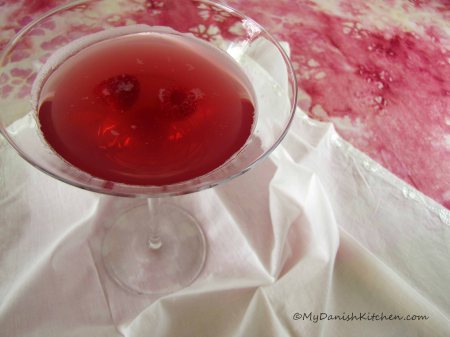
One of our favorite place to eat is Carrabba’s Italian Grill. Since it’s just the two of us we always sit by the grill and watch the staff prepare the food, it makes for great entertainment. We don’t usually buy alcoholic drinks with our meal but when we were dinning there with my In-laws I went outside our normal routine. I ordered the Carrabba’s Raspberry Martini (Razzamatini) and it was so delicious I could have sucked the entire drink down in one mouthful…but I behaved myself 🙂

Razzamatini

Razzamatini

After our visit there I started searching for a recipe for the Razzamatini and I actually found one. When I first tested the Razzamatini it was a little bitter and so I did just a slight adjustment and I think it’s pretty much right on, at least the way it was served for me that night. I tried it first using Smirnoff Raspberry Vodka and it was very good and then I tried it with Stolichnaya Raspberry Vodka (Stoli Razberi) and it was even better, so if you can get Stoli Razberi Vodka I would recommend that particular brand. I hope you enjoy this delicious drink, SkĂĄl and Cheers!

Razzamatini, makes 1 drink

Ingredients:

2 oz Raspberry Vodka

1 oz Chambord

1 oz Sour Mix

1 oz Cran-Raspberry juice

Directions:

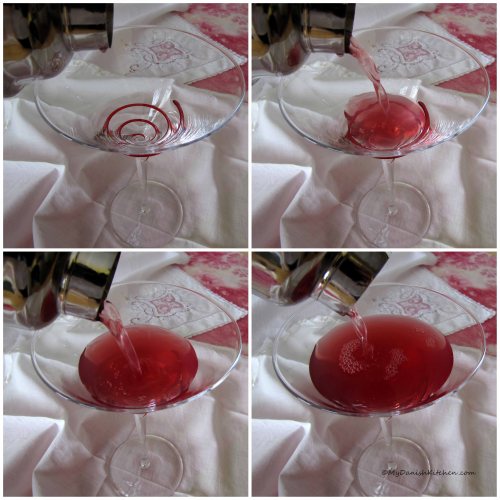
Pour all ingredients into a cocktail mixer with a handful of ice. Shake and pour into your glass.  Garnish with fresh raspberries or blackberries if you like. Cheers and enjoy!

Source: adapted from Cincinnati Mom

Print Friendly and PDF

Svensk Pølseret

Svensk Pølseret

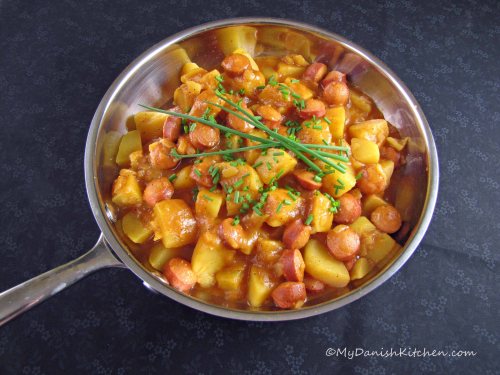
Svensk pølseret is a well-known Danish stew that I think most Danes have had on occasion. It is not a Swedish dish, as the name would have you believe, but rather it seems to have come from a summer camp experience in Sweden and was created by using up the last bits of foods in the pantry. And that is what makes this dish so great, it allows you to use up your left-over potatoes and it’s quick and very easy to make on a busy weeknight. I made it many years ago and then forgot about it until my family came to visit. Traditionally Svensk pølseret is made with paprika but in my sisters version she is using curry instead which taste absolutely wonderful and adds a nice heat to the dish.

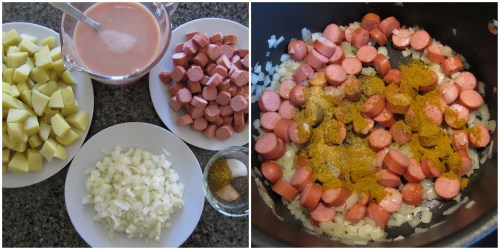
Making Svensk Pølseret

Making Svensk Pølseret

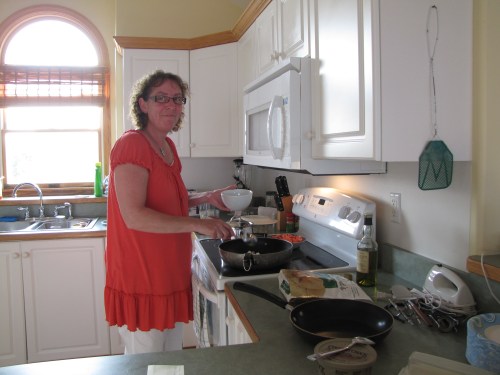
My sister Jonna making Svensk Pølseret

My sister Jonna making Svensk Pølseret

Svensk Pølseret (6 servings)

Ingredients:

1 tablespoon Extra Virgin Olive Oil

1 medium onion, diced

6-7  hot dogs, sliced

2 1/2 lbs left-over cold cooked potatoes, cubed

1 cup ketchup

2 cups milk

2-3 tsp curry

1 tsp salt

1/4 tsp pepper (optional for extra heat)

1/2 tsp garlic powder

Chives, for garnish

Directions:

Potatoes are peeled, cooked and drained, placed in refrigerator overnight.

Dice onion and hotdogs. Cut cold potatoes into cubes. Mix ketchup and milk together and set aside. Cook onions in a small amount of olive oil until translucent, add hotdogs and cook for another 2-3 minutes. Add curry, salt, pepper and garlic powder, cook for another minute. Add potatoes and ketchup/milk mixture, stir gently to combine. Turn heat down to low and continue to simmer very gently for another 30-45 minutes. Garnish with chives and serve with warm dinner rolls and enjoy.

Source: my sister Jonna Pedersen

Print Friendly and PDF

Davidson Hall at Campbell Folk School, Kitchen, Music and "Wet Studios

Davidson Hall at J. C. Campbell Folk School where the Kitchen, Music and “Wet” Studios are located.

Back in 2005 Joe and I attended a week long seminar at J. C. Campbell Folk School which is located in the beautiful Appalachian mountains in Brasstown NC. The campus is set in the most secluded environment and it is easily navigated with numerous trails for an early morning walk. Each day begins with the tradition of Morningsong which is a combination of music and folklore, a great way to start your morning. Meals are served family style in the Dinning Hall which is a great opportunity to meet new people from all walks of life. The campus also has a charming History center and a wonderful Craft Shop which features pottery, handwoven items, jewelry, wood crafts and ironwork. Back in 2005 Joe took a Viking Blacksmithing class and I took a Scandinavian baking class and it turned out to be one of those fantastic experiences that stays with you forever. So you can imagine my surprise and excitement when I was approached by Campbell Folk School to come down and teach the Scandinavian baking/cooking class during their Scandinavian Heritage week during March 2013.

Director of J. C. Campbell Folk School Jan Davidson performing Morningsong. It's a wonderful beginning to your morning, each day Morningsong is led by someone different.

Director of J. C. Campbell Folk School Jan Davidson performing Morningsong. It’s a wonderful beginning to your morning and each day Morningsong is led by someone different.

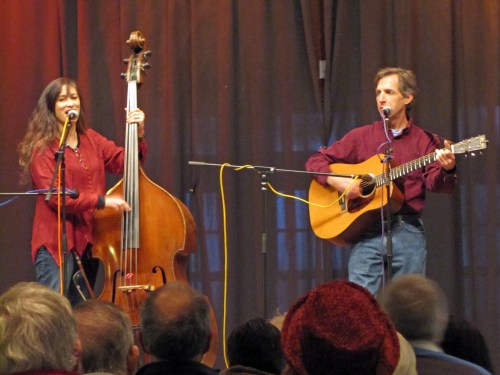
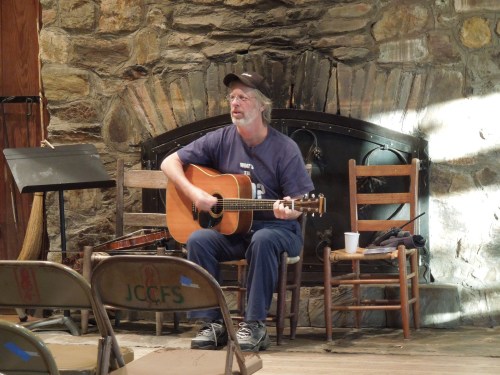
Evening entertainment

I didn’t catch their names but they were great. If anyone knows who they are please let me know.

David Baker taught the Kaleidoscope class and he was a riot, a real viking :)

David Baker taught the Kaleidoscope class and he was a riot, a real viking 🙂

Local Fireman doing Morningsong and smartly incorporating fire prevention into his routing.

Local Fireman J. D. Robinson doing Morningsong and smartly incorporating fire prevention into his routine.

The class turned out to be a really good group which meshed together very nicely. There were five wonderful ladies, all with fantastic personalities: Lucrecia, Paula B, Paula C, Roberta and Lynn Ann and then we had one gentleman named Mark which turned out to be a really funny and pleasant feller.

Our class left to right: Paula, Roberta, Lucrecia, Lynn Ann, Gitte, Mark and Paula

Our class left to right: Paula, Roberta, Lucrecia, Lynn Ann, Gitte, Mark and Paula

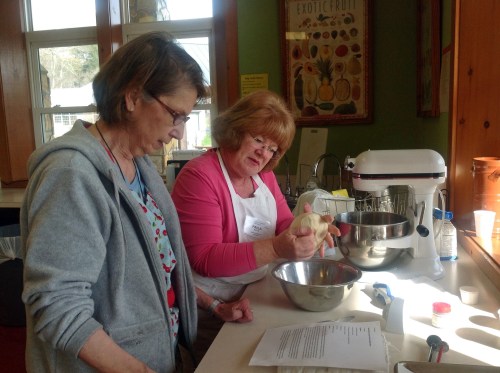
For the class I had prepared recipes which were Danish, Norwegian, Swedish and Finnish in origin and the class was set up to be predominantly baking with one full day of cooking savory foods.

Mark making Pebernødder

Mark making Pebernødder

Roberta and Paula making Norwegian Julekake

Roberta and Paula carefully following a recipe

Lynn Ann making Æbleskiver, they were delicious!

Lynn Ann making Æbleskiver, they were delicious!

Lucrecia and Paula made the classic Othellolagkage. They did an outstanding job.

Lucrecia and Paula made the classic Othellolagkage. They did an outstanding job.

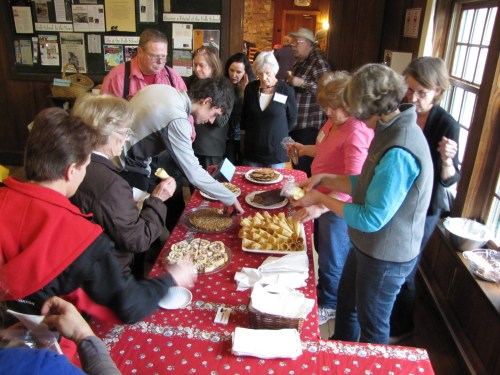
Here are a few pictures of some of the baked goods the class made. We made a lot more than this but I didn’t get pictures of everything.

Othellolagkage

Othellolagkage, a true masterpiece!

Campbell 2 (42)

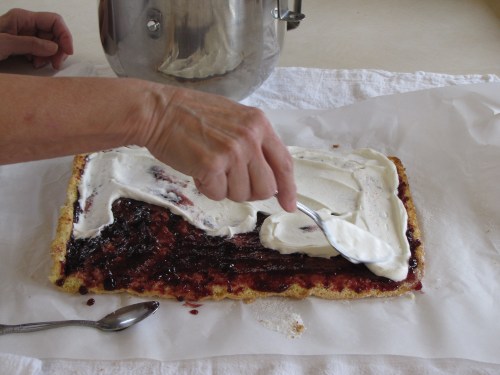
Making Hindbær Roulade

Campbell 2 (52)

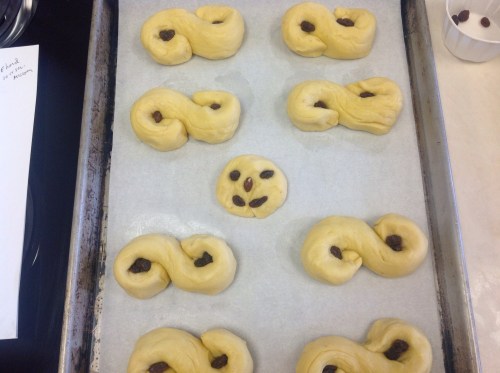
Swedish Lussekatter, before baking.

Campbell 2 (60)

Birkes with Remonce.

Campbell 5 (5)

Kringle pastry

Campbell 5 (6)

Æbleskiver, the only thing missing is a warm glass of Gløgg.

Campbell 5 (8)

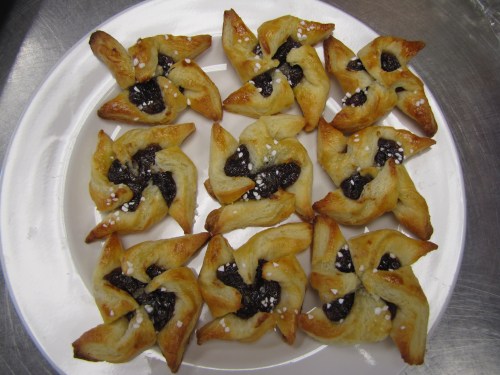
Finnish Christmas Stars.

Campbell 6 (3)

Norwegian Krumkake, they were served with vanilla and chocolate filling. Very popular!

Campbell 6 (4)

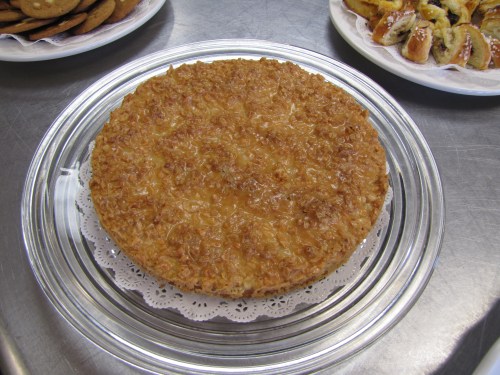
Scandinavian Toscakake.

Campbell 6 (6)

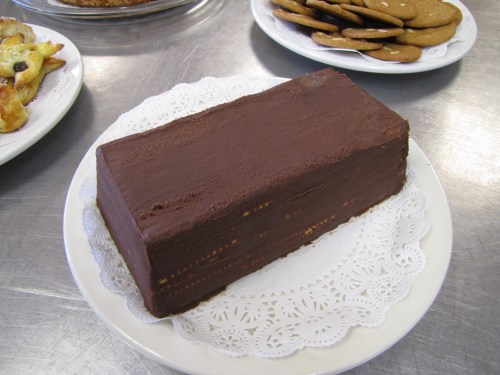
Kiksekage, very decadent.

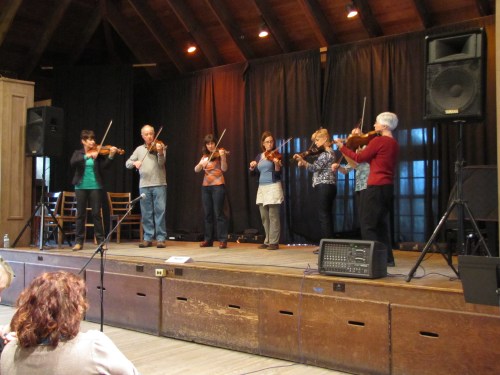
The Fiddle class stopped in and serenaded us. They were well fed.

The Fiddle class stopped in and serenaded us. They were well fed.

Midweek is when we cooked the savory foods leading up to our dinner party on Wednesday evening. I wanted them to experience small samples of typical Danish foods and there were some hesitation and a lot of joking 🙂 about eating Marinated Herring and Liver Pate in particular, but I think all in all, they really did like those foods. Our dinner that evening turned out to be a lot of fun and it was a real pleasure meeting everyone’s significant others and family members.

Our dinner party.

Our dinner party.

The menu consisted of a mixture of different food:

Smørrebrød with Danish Rye Bread (Rugbrød), Marinated Herring (Sild) and homemade Curry Salad (Karrysalat)

Smørrebrød with Rye Bread, Liver pate (Leverpostej), fried mushrooms and bacon

Meatballs (Frikadeller) with Red Sweet and Sour Cabbage (Rødkål) and Caramelized Potatoes (Brunede Kartofler)

Ris a La Mande with warm Cherry Sauce (Ris a La Mande with Krisebær Sovs)

Lucrecia stirred and stirred the Risengrød so it wouldn't burn. I think we should have given her some sort of "best stirring" award :)

Lucrecia stirred and stirred the Risengrød so it wouldn’t burn. She deserved some sort of “stirring” award 🙂

Campbell 3 (5)

Making “oh so wonderful” Liver Pate.

Campbell 3 (10)

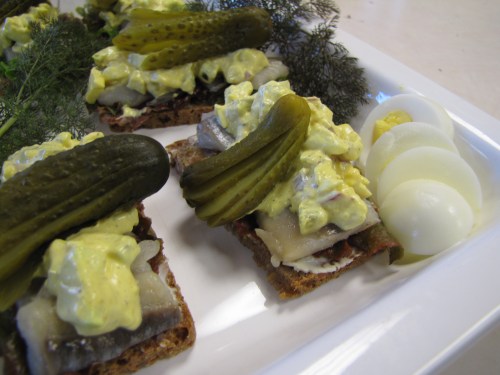
Danish Smørrebrød with Marinated Herring and homemade Curry Salad (Karrysalat).

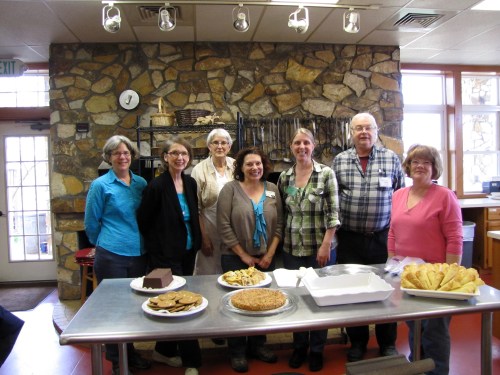
Friday afternoon was the closing ceremony and all the different classes put on a display of what they had been making during the week. As for our class, we spent the morning baking so we could provide samples of some delicious special treats to all the other students and instructors. All of the samples were gone within fifteen minutes and we got great reviews on our baked goods. Great job Guys! 🙂

Scandinavian Baking Class, Closing Ceremomy

Scandinavian Baking Class at the Closing Ceremony

The Fiddle class provided entertainment at the Closing Ceremony.

The Fiddle class provided entertainment at the Closing Ceremony.

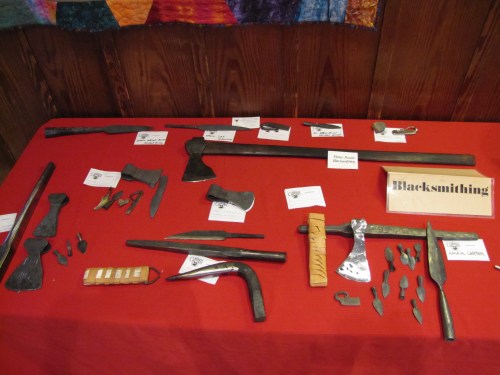
Viking Style Ironwork

Viking Style Ironwork

Thread Art

Thread Art

Norwegian Rosemaling

Norwegian Rosemaling

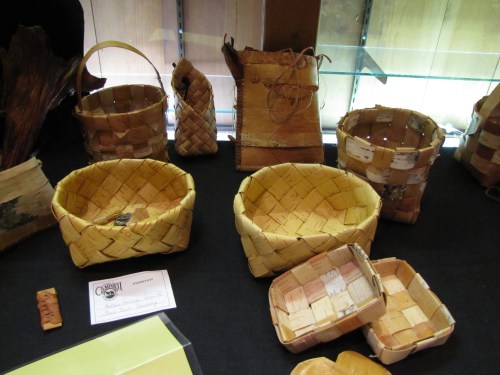
Birch Bark Basketry

Birch Bark Basketry

Nordic Knitting

Nordic Knitting

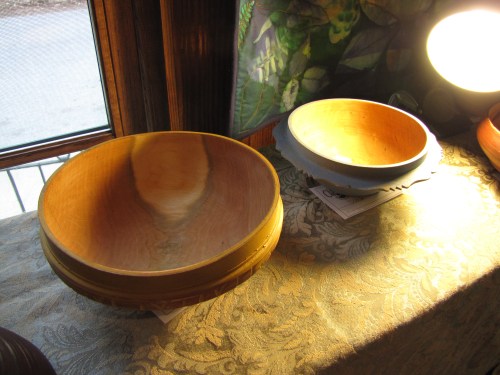
Woodturning

Woodturning

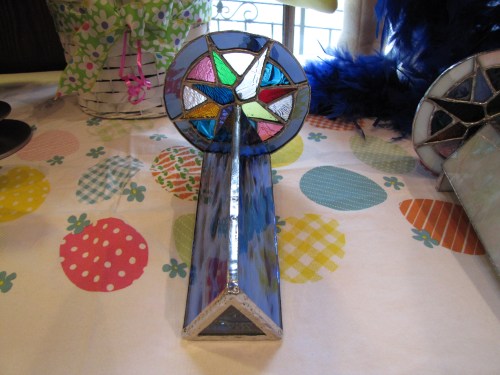
Kaleidoscopes

Kaleidoscopes

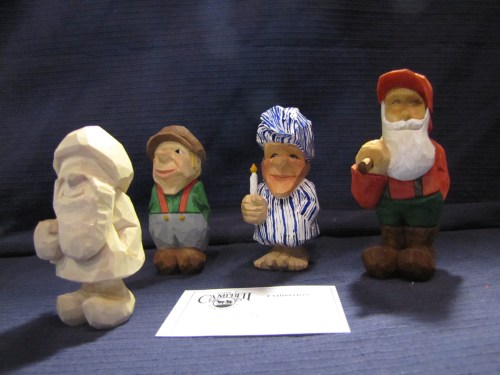
Figure Carving

Figure Carving

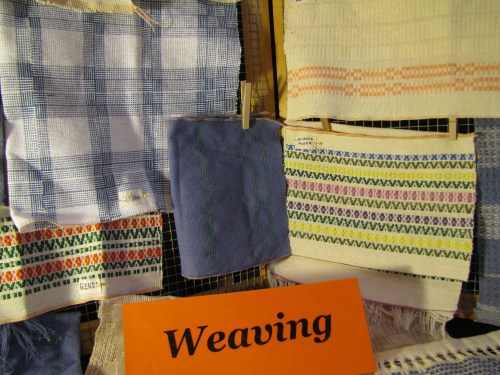
Weaving

Weaving

Norwegian Bentwood Boxes

Norwegian Bentwood Boxes

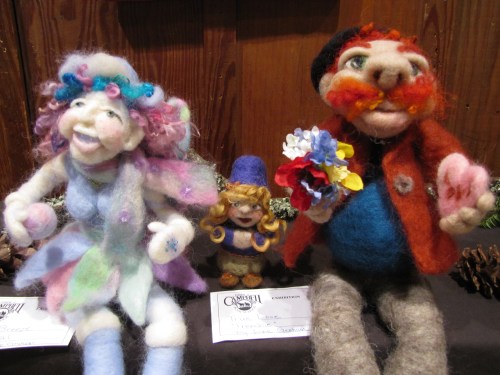
Needle Felting

Needle Felting

I wanted to say thank you to all of my students for being so pleasant and I hope you enjoyed tasting all the delicious treats we made. I also wanted to say thank you to Carla Owen who initially approached me to teach at the Folk School and to Nanette Davidson for all of your help and the generous offer you extended to me. I thank all of you!

The Easter Bunny also made an appearance at the Folk School.

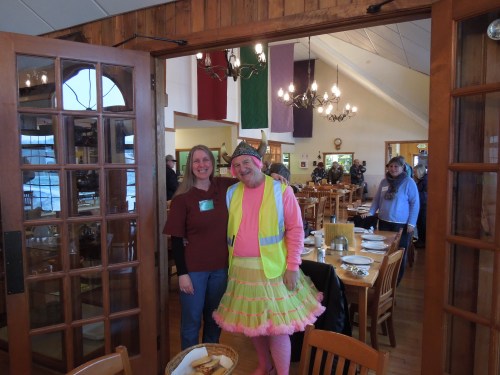
The Easter Bunny also made an appearance at the Folk School. (David Baker in disguise)

Source: My Danish Kitchen

Print Friendly and PDF

Making Rumtopf

Rumtopf is a very popular drink in Denmark and Germany. I recall my father making this when I was a girl and that it was a huge hit in the house. Of course my parents let me taste it and I liked the fruit 🙂 although very strong, but I didn’t care for the rum liquid. It was much too strong for my young taste buds, however, that is not the case today. Today it is delicious, but don’t forget that this is straight flavored rum you are consuming and the wonderful fruit is loaded with alcohol. So beware when your enjoying this delicious Rumtopf.

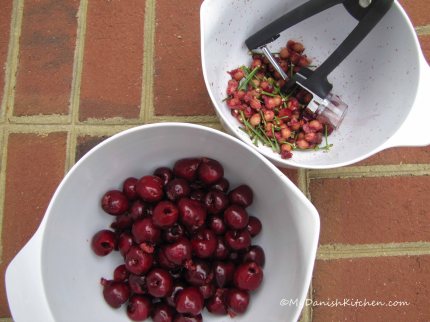
I choose to pit my cherries, however, the pits can be left in place for added flavor.

Traditionally the Rumtopf is started in late spring and fruit is added during the summer as they come into season. However, since fruit is now available pretty much year-round you could start it at any time but ideally you want to follow the season for the best flavors. When you choose your fruit make sure they are not over-ripe. Small fruit that contain pits (like cherries) can either be pitted or the pits can be left in place for added flavor. Larger fruit need to be pitted and cut into bite size pieces.

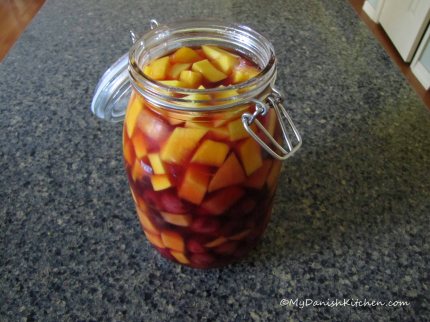
Rumtopf

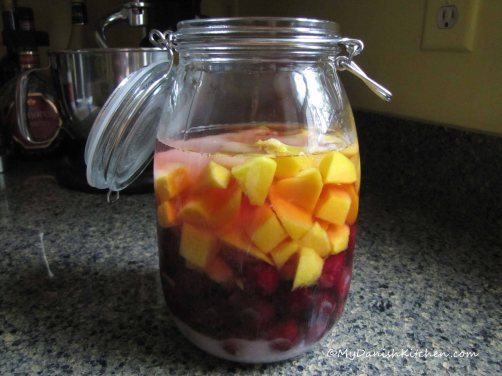
The Rumtopf is typically made in a large stoneware pot that has a lid. I don’t have a Rumtopf pot so I used a large glass jar which worked out well except for the fact that I was not able to add very much fruit. My Rumtopf only had two kinds of fruit, cherries and mangoes and hindsight being 20/20 I would not choose mango again with other dark colored fruit because the darker fruit (cherries) give off color and ended up discoloring my beautiful yellow mango. Not esthetically pleasing, but delicious nonetheless. The other dilemma I had was that you want to store the Rumtopf in a cool, dry place away from direct sunlight. Well it’s been such an extremely hot summer here in Virginia and our house has been comfortable, but not cool per se, so I choose to store it in the refrigerator to avoid too much fermentation.

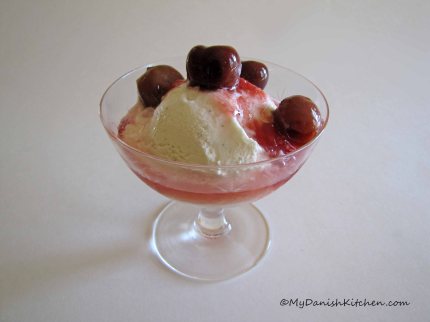
Rumtopf fruit and liquid mixed with a little strawberry jam over vanilla ice cream…
ĂĽber delicious.

Suitable fruit: Cherries, Mangoes, Plums, Pears, Peaches, Apricots, Nectarines, Pineapple, Raspberries, Strawberries, Gooseberries, Red Currants, Grapes

Fruit not suitable:

Banana (too soft)

Watermelon and Cantaloupe (too watery)

Citrus (too much acid)

Apple (takes on an odd texture)

Blackberries and Blueberries (may discolor other fruit)

Rhubarb (too sour)

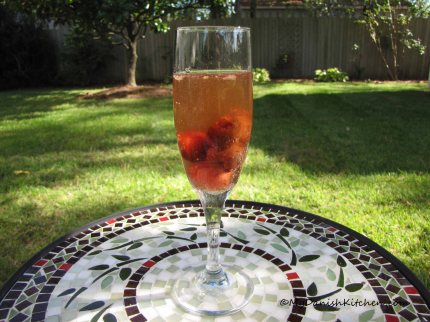
Mix half and half Rumtopf and Champagne for a cool delicious drink

Rumtopf

Ingredients:

1 pound fresh fruit

1/2 pound sugar

good quality rum, unflavored, enough to cover fruit

Directions:

Add fruit to jar. If fruit is large, cut into bite-size pieces. If fruit has pits they may either be left in place for added flavor or removed if you desire. If you choose to leave the pits in place don’t forget to tell your guests that pits are present, to avoid accidents.

Pour sugar over fruit and add rum to cover fruit by 1 inch. Give a quick stir and seal with a tight-fitting lid. Store in a cool dry location away from direct sunlight. Allow fruit to sit for at least 4 to 6 weeks, tasting periodically. Serve Rumtopf fruit and liquid over Ice Cream, cakes, cheese cakes and waffles or inside rolled-up crepes. Serve strained Rumtopf liquid as an after dinner cordial or mix with other drinks of your choice. Enjoy!

Source: My Danish Kitchen

Print Friendly and PDF

Karrysalat - Danish Curry Salad

Karrysalat – Danish Curry Salad

I never liked Danish Karrysalat until I made a homemade version to serve at my Danish Christmas luncheon. You may ask, why did I make it in the first place if I knew I didn’t like it. Well traditionally Karrysalat is a classic topping for marinated herring and marinated herring is a “must” at any self-respecting Danish Christmas luncheon table. And when I tasted my homemade Karrysalat I was instantly hooked because it is so much better than the store-bought kind. Like I mentioned, it’s is served with marinated herring on top of Rugbrød (dark Rye bread) but I could eat it on top of just about any kind of lunch meat. This is super delicious and I recommend that you whip up a batch immediately and enjoy. 🙂

Karrysalat

Karrysalat – Curry salad

Ingredients:

3 hard boiled eggs, diced

5 sweet Gherkins, diced (Cornichoner in Danish)

1 tablespoons minced red onion

1 small apple, diced

2 deciliter mayonaise

2 tablespoons creme fraiche

1 teaspoon curry

1/2 teaspoon dijon mustard

1/4-1/2 teaspoon sea salt

1/4 teaspoon pepper

Directions:

Dice eggs, gherkins, onion and apple into small pieces. Add remaining ingredients and stir gently to combine. Allow salad to rest in refrigerator for at least a couple of hours before serving. Will keep for about 1 week in refrigerator. Enjoy!

Source: adapted from Beretninger fra et autentisk landbrug

Print Friendly and PDF

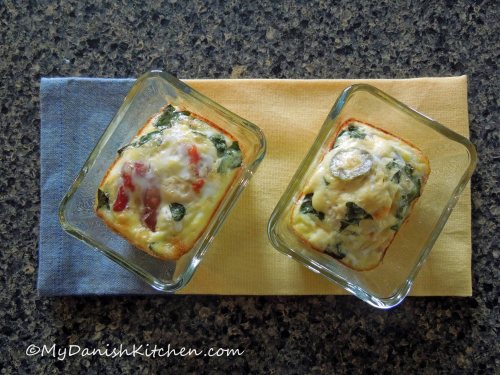
Mini Filled Omelette

The other night I was looking for a different type of side-dish for my Flounder and I remembered seeing this omelette presentation on another food blog. It’s a fun way to make an omelette, not to mention that making it this way keeps the portion size in check and the presentation is nicer than your typical omelette. As for the fillings, you can dream up whatever you like or maybe use up that little left-over you have sitting in the fridge. Some filling ideas could include spinach, diced tomatoes, left-over cooked vegetables like asparagus or left-over cooked meats like shrimp or chicken or perhaps some processed meats like Prosciutto or Ham. Add some fresh herbs for added flavor like parsley, chives or basil and your cheese could be a good Goat cheese, Feta, Cheddar or Gouda. The sky is the limit. Here is what I put in mine (and I foresee diced cooked shrimp in the very near future).

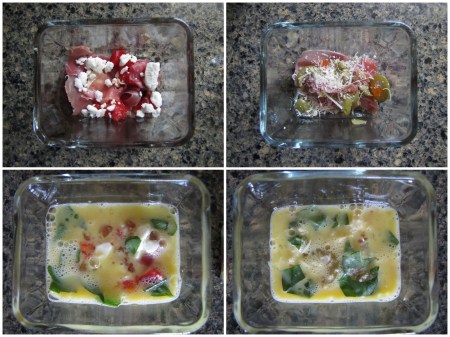
Making Mini Omelette

Making Mini Omelette

Mini Filled Omelette #1

Prosciutto

roasted red pepper

feta cheese

basil

1 egg with a dash of milk

Mini Filled Omelette #2

Prosciutto

olives

Parmesan-reggiano cheese

basil

1 egg with a dash of milk

Directions:

Preheat oven to 400 degree F (200 degrees C). Start by spraying your dish with a small amount of oil, then add your fillings to the dish. Beat one egg with a dash of milk and pour over the filling. Make sure the dish is not filled up all the way to the edge since the egg will rise a little in the oven. Bake for 15-20 minutes or until egg is set.

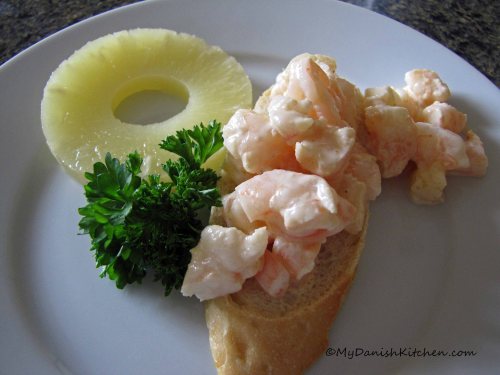
Mona's Rejesalat - Mona's Shrimp Salad

Mona’s Rejesalat – Mona’s Shrimp Salad

Once a month I get together with a group of wonderful Danish ladies. We’ll meet for afternoon coffee or dinner and we will talk and catch up on what’s going on in our lives and the world. We take turns hosting the party and there is always something delicious to eat on the table…and oh yes, we sing! 🙂 I guess that deserves an explanation. Well, at Danish parties when the company is good, conversations are stimulating, the food is delicious and maybe (or maybe not) the alcohol is flowing, we lock arms and we sing funny Danish drinking songs. It’s a riot.

Mona Eisenbaum

Mona Eisenbaum

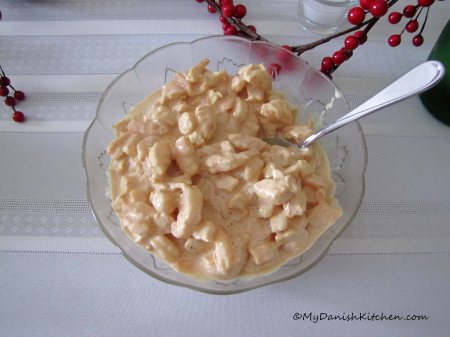
This is the Shrimp Salad that my Danish friend Mona use to serve as an appetizer and it would always disappear very quickly. Mona has since then passed away but her Shrimp Salad lives on at our meetings. Mona was an excellent cook and she would prepare the most delicious dishes for us. She never followed recipes and she told me what was in the Shrimp Salad but no specific amounts. I had tried making it but something was missing and my other Danish friend Kaja finally helped me out with the missing ingredient…pineapple. With this recipe you can choose to turn up the pineapple flavor or the curry, it all depends on your taste buds. I like to be able to taste the curry a little.

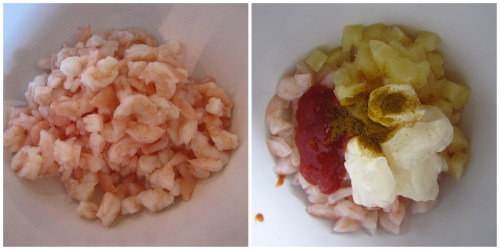
Making Shrimp Salad

Making Shrimp Salad

When I make this I use small frozen deveined cooked shrimp. Make sure they are fully thawed and pat them dry with a paper towel, otherwise the salad will be too watery. I hope you try this delicious Shrimp Salad and enjoy!

Mona's Shrimp Salad

Mona’s Shrimp Salad

Mona’s Rejesalat – Mona’s Shrimp Salad

Ingredients:

450 gram cooked, deveined small shrimp (16 oz.)

4 thin slices canned pineapple, diced

1/2 cup mayonnaise

1/4 cup ketchup

1/2 – 1  teaspoon curry

Directions:

Pat shrimp dry with a paper towel. Dice shrimp and pineapple into small pieces. Add mayonnaise, ketchup and curry, stir gently to combine. Refrigerate for at least a couple of hours before serving. Serve on freshly baked white bread. Enjoy!

Source: my late Danish friend Mona Eisenbaum

Print Friendly and PDF

Norwegian Krumkager

Back in 2005, Joe and I took a week long class at John C. Campbell Folk School. We were at the school during their Scandinavian Heritage week which we figured would be the ideal time for us to be at the school. Joe took a blacksmithing class and I took Scandinavian baking which was so much fun and gave me a lot of confidence in my baking skills. Campbell Folk School is located in the southern Appalachian mountains by Brasstown, North Carolina and the campus is set in the most beautiful and serene location. The school is based on the Danish concept of Folkehøjskole which is an adult non-competitive learning experience. Campbell Folk School offer a wide variety of classes based on American traditional arts and crafts such as basketry, dance, drawing, enameling, leather, metalwork, music, photography, woodworking and so much more. I have written about my experience at Campbell Folk School before when I made Wienerbrød and making these Norwegian Krumkaker brought back wonderful memories about our experience there. I can honestly say that is was one of the most rewarding, exciting and at the same time peaceful experiences I have ever had. To get a feel for the atmosphere at the Folk School check out their blog.

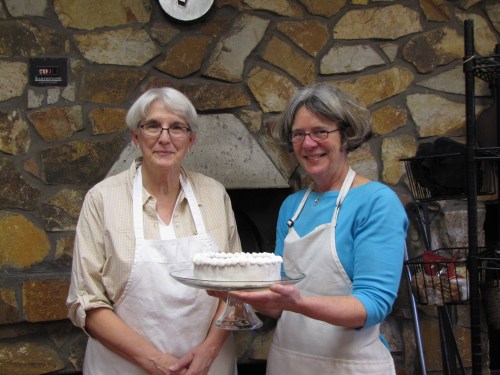
Me at John Campbell Folk School practicing decorating a delicious layered cake.

Me at John Campbell Folk School practicing decorating a delicious layered cake.

Krumkake is a delicate and delicious Norwegian waffle cookie which is traditionally served during the Christmas holiday. I first learned to make this classic waffle while taking my Scandinavian baking class at Campbell Folk School. Making the waffle does require an Krumkake iron and a cone shaped roller which can be purchased pretty easily these days online. The cookies can seem a little tricky to roll at first (careful, they are hot) but after a couple of cookies you’ll quickly get the hang of it. They can be rolled into a cone shape, a cylinder (by using the handle of a wooden spoon) or simply served as a flat round disc. The filling choices are numerous and only limited by your imagination but traditionally they are served with whipped cream and fresh berries.

Norwegian Krumkake

Krumkake – makes 38 Krumkaker

Ingredients:

4 large eggs, at room temperature

200 gram butter (7 oz.)

200 gram sugar (7 oz.)

200 gram flour (7 oz.)

2 tsp vanilla extract or 1/2 tsp ground cardamom

warm water to get correct batter consistency (I used 14 tbsp)

Special equipment required: Krumkake iron and a Krumkake roller (if not already included with your iron)

Directions:

Melt butter and set aside. Add eggs and sugar to a bowl and beat on high until thick and pale yellow in color. While continuing to mix, pour the melted butter, in a thin stream, into the egg mixture. Add your choice of either vanilla extract or cardamom and while continuing to mix, add  flour in small increments. If batter is too thick, add warm water to correct consistency.

Note: follow your Krumkake iron manufactures instructions regarding temperature settings, if iron needs to be greased and cooking time. Using the krumkake roller will give you a cone shape and using the end of a wooden spoon with give a cylinder shape.
Place a large piece of parchment paper onto your counter top next to the Krumkake iron. I taped the corners of the paper down to keep it from moving around.

Pour a generous tablespoon of batter onto your hot krumkake iron, close lid and cook until ready (30-45 seconds). Using a small offset spatula or a butter knife, quickly lift the soft krumkake onto the parchment paper and roll into desired shape. Keep the cookie on the roller for 1-2 minutes to allow it to take its shape before sliding the cookie off the roller and placing it onto a baking sheet to cool completely. Store cookies in an airtight tin until ready to serve. Fill cones with your favorite filling right before serving and enjoy.

Krumkake serving suggestions: whipped cream with fresh berries, soft ice cream, preserves or jams, pudding, custard or Carole’s Almond Pudding (recipe follows)

Carole’s Almond Pudding:

Ingredients:

1 small package instant vanilla pudding (95 gram or 3.4 oz.)

1 cup heavy whipping cream

1 cup milk

1/4 – 1/2 tsp almond extract

Directions:

Beat all ingredients together for 1-2 minutes until desired consistency and keep cool in refrigerator until ready to serve. Pipe into krumkaker cookies and serve immediately.

Source for Krumkake: adapted from Tine.no

Source for Carole’s Almond Pudding: my friend and coworker Carole Yoder

Print Friendly and PDF

Making Krumkaker