Feeds:
Posts
Comments

Archive for the ‘Danish’ Category

Citronmåne – Lemon Moon Cake

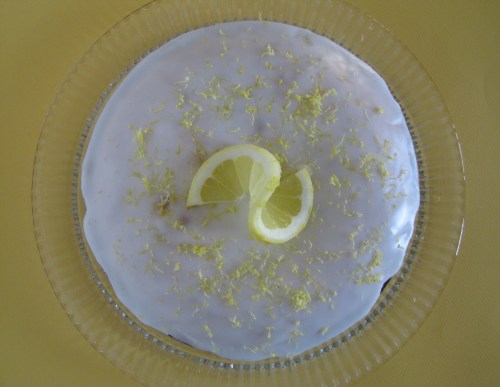
First of all, I want to say Thank You to everyone for your well wishes to my husband. These last couple of weeks have indeed been trying times but I am glad to say that he is slowly getting better. It is heartwarming to see the closeness and kindness there is within the Food Blogging community and it was something that I did not expect to find when I first started my little food blog. And so, now that I am going to start doing some blogging again, it may not be quite as frequently as in the past, I am very excited to show you this Danish Citronmåne which I translated into Lemon Moon Cake. A while back I got several inquiries about this particular cake but it was not a cake that I had any particular memories attached to. But I got curious and started researching different recipes. Then I came across this one and it sounded very delicious, and when I made it, it did not disappoint. It is moist, lemony and very zesty. I used Danish Marzipan with 60 % Almonds and Danish Butter, but I’m sure any old butter will do just fine. I hope you enjoy it as much as we did.
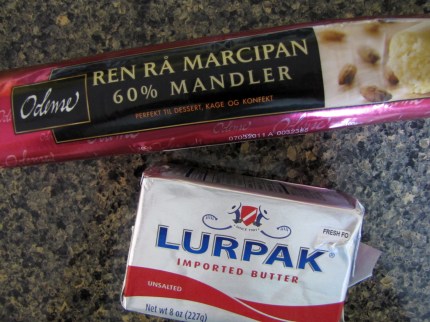
Marzipan and Danish Butter
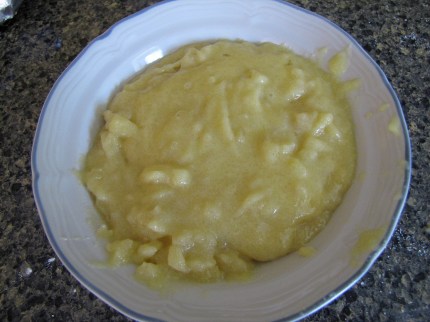
Dough A
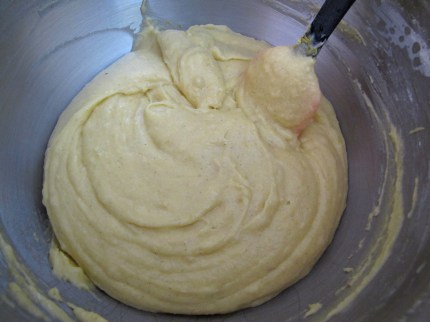
Dough A and Dough B combined

Ingredients:

Dough A:

125 gram marzipan (4.4 ounces)

85 g. sugar (3 oz.)

50 g. butter (1.8 oz.) (room temperature)

75 g. whole egg (2.6 oz.) (room temperature)

Dough B:

250 gram butter (8.8 oz.) (room temperature)

1 whole vanilla bean

125 g. confectioners sugar (4.4 oz.)

125 g. sugar (4.4 oz.)

150 g. whole egg (5.3 oz.) (room temperature)

100 g. egg yolks (3.5 oz.) (room temperature)

190 g. flour (6.7 oz.)

65 g. corn starch (2.3 oz.)

1 organic lemon ( zest and juice)

Lemon glaze:

150 g. confectioners sugar (5.3 oz.)

1 organic lemon (zest and 1/2 lemon juice)

very small amount of cold water, if needed

Directions:

Preheat oven to 375 degrees Fahrenheit (190 degrees Celsius).

Dough A: Knead marzipan and sugar together using hands. Knead butter into marzipan in small increments. Add egg and knead into marzipan mixture, set aside.

Dough B: Cut open vanilla bean and scrape out seeds. Place butter, vanilla seeds, confectioners sugar and sugar into a bowl and mix together until creamy. Add eggs one at a time while mixing just until combined. Sift flour, corn starch, add lemon zest and lemon juice  into wet ingredients and gently incorporate using a spatula. Add Dough A to Dough B and stir just until combined.

Pour dough into a greased spring-form and bake for 35 to 40 minutes. Cake is done when it springs back when lightly touched in the center. Let cool completely.

Lemon glaze: Zest from one lemon is spread out on a small plate and allowed to air dry until cake is ready to get glazed. Mix confectioners sugar, juice from 1/2 lemon and a few drop of cold water if needed. Gently warm glaze in a small pan and quickly spread out over cake. Immediately sprinkle with dried lemon zest. Enjoy.
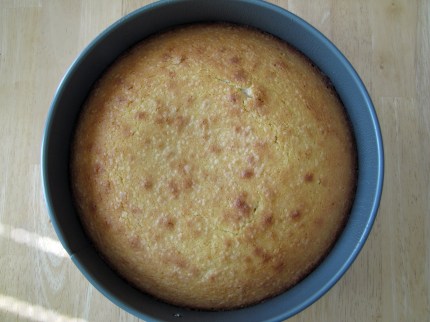
Citronmåne in springform pan
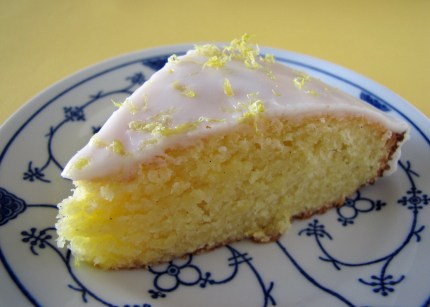
Citronmåne

Source: Det Søde Liv

Print

Read Full Post »

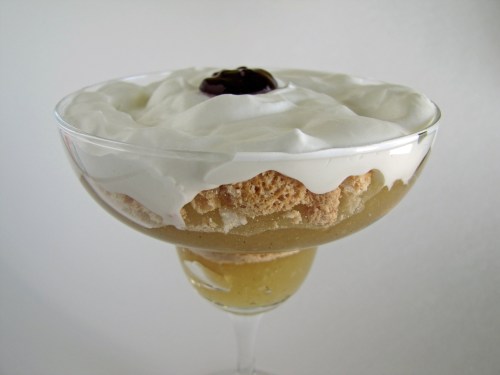
Æblekage med Makroner og Flødeskum

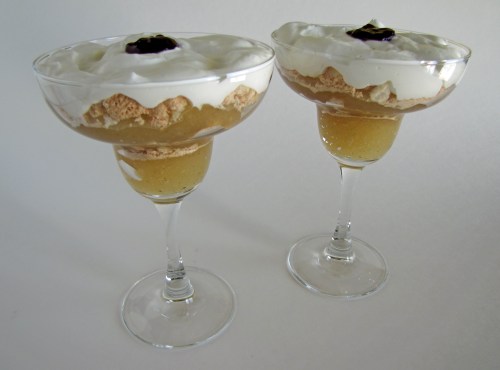
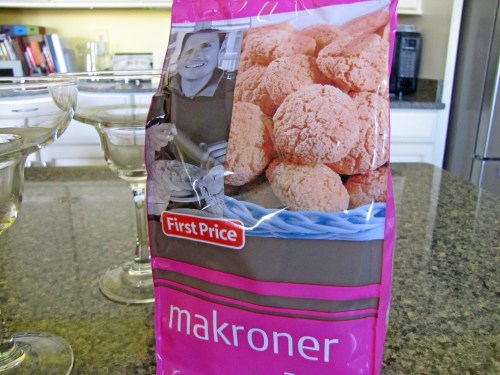
Here is a Danish Apple Cake with crushed Macaroons. It is not a “cake” per se but rather a sweet, cold and refreshing dessert. Make sure to adjust the amount of sugar to your liking, taking into account that the macaroons are also very sweet. The macaroons I used here are very crisp and crumble easily. This dessert is easy and quick to make, not to mention delicious and often served for afternoon or evening tea/coffee in Denmark.

Ingredients:

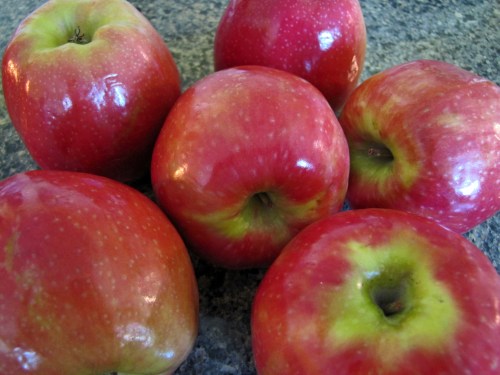
6 sweet apples, peeled and sliced

2 cinnamon sticks

1 vanilla bean, seeds scraped out

1/2 to 1 cup sugar, to taste

1/4 cup of water

macaroons

whipping cream

Directions:

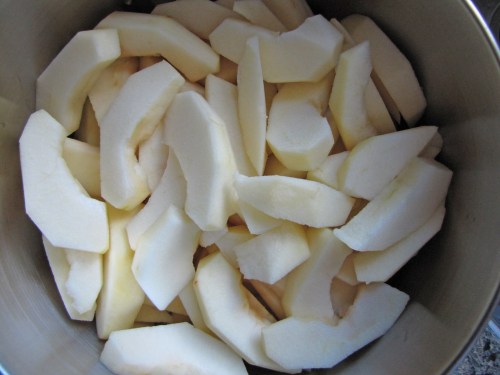
Peel, core and slice apples, place in a cooking pot. Add cinnamon sticks, scraped out vanilla seeds and vanilla bean, sugar and water to the pot. Heat to medium heat and cook covered for 10 minutes. Remove cinnamon sticks and vanilla bean. Place apples in a blender or food processor and blend until smooth. Place in refrigerator and allow to cool.

To assemble Apple Cake in a serving dish or glasses start with a layer of apple sauce then a layer of crushed macaroons. Repeat layers making sure to end with a layer of apple sauce. Before serving beat whipping cream until desired consistency and layer on top of apple sauce. If desired, you can place small dollops of your favorite preserves for decoration. Enjoy!

Peeled, cored and sliced apples

Danish Makroner (Macaroons)

Æblekage med Makroner

Source: My Danish Kitchen

Print

Read Full Post »

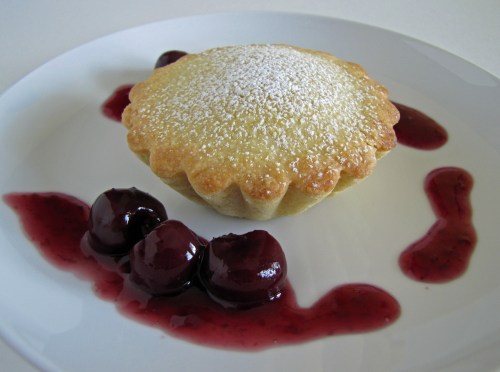
Cremelinser with Cherry Sauce

As you may have heard me say before, I am a big sucker for Custard. Whenever I make something with Custard I always make sure to leave one or two big spoonfuls in the bowl for me to taste. Well I have been craving that sweet vanilla flavor lately and when I came across these delicate little cremelinsers I knew that I had to make them immediately. And so I did. The Custard did not disappoint, it turned out fluffy and creamy. I thought the Cremelinser’s should be served with a sauce  and what I wanted to make was a raspberry sauce, but I was not able to find any plump fresh raspberries so I made a cherry sauce instead which was equally delicious. Please enjoy!

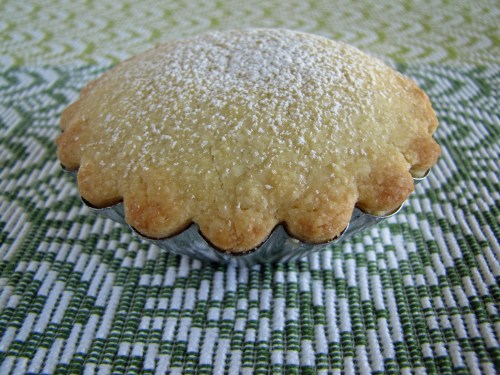
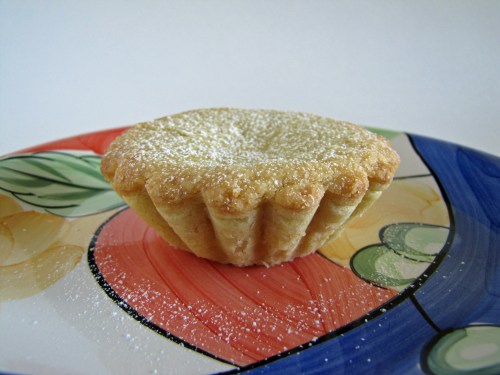
Cremelinser

Ingredients:

For the dough:

150 grams cold butter (about 10 tablespoons)

250 grams flour (1 2/3 – 2 cups)

60 grams sugar ( 1/3 cup)

2 egg yolks

1 tablespoon cold water

For the Custard filling:

2.5 deciliter milk (1 cup)

1/2 vanilla bean

2 tablespoons sugar

2 egg yolks

1 tablespoon cornstarch

Directions:

Making the filling:

Cut vanilla bean in half lengthwise and scrape out seeds with the tip of a knife. Place vanilla seeds, bean and milk in a small saucepan and bring to a simmer. Meanwhile, beat the egg yolks and sugar together until pale in color and fluffy. Add cornstarch and mix together. While continuing to beat the eggs, slowly pour half of the hot milk into the eggs to temper it. Then pour the tempered egg mixture back into the saucepan and return to low temperature on the stove. Continue to whisk mixture over low temperature until the custard starts to thicken, making sure the custard does not boil. Remove from heat, place in a small bowl, cover with cling wrap directly on the custard surface to prevent a skin from forming and place in refrigerator to cool.

Making the dough:

Cut cold butter into small cubes, add to flour and crumble butter and flour together. Add egg yolks, sugar and cold water and quickly bring dough together using your hands. Form dough into a flattened disk, wrap in cling wrap and refrigerate for at least 1/2 hour.

Preheat oven to 200 degrees Celsius (392 degrees Fahrenheit)

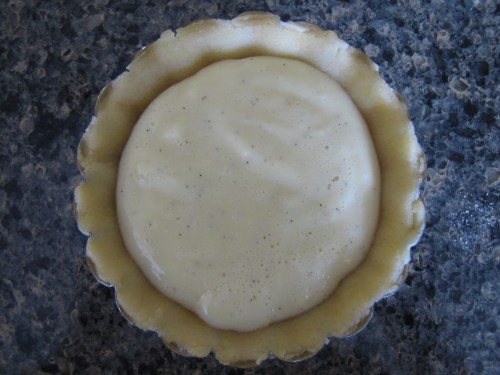
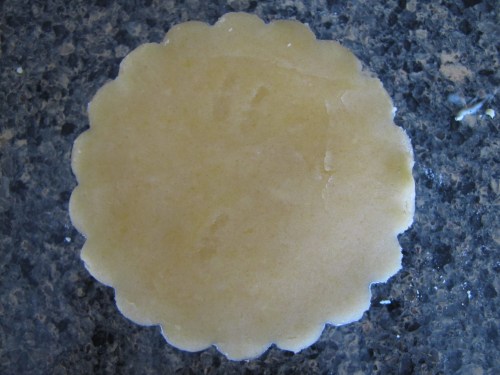
Dust working surface with flour and roll out dough to about 3 mm thickness. Using a 10 cm (4 inch) circle cut out ten circles. Spray five 9 cm (3 1/2 inch) tart forms with cooking spray. Place a round circle of dough in tart form and gently press dough into form. Fill dough tart form with custard up 2/3 to the top and place a second circle on top, pressing down gently to close. Pinch off excess dough around the edges. Makes 5 tarts. Place tarts directly onto the rack in the oven and bake for 15 to 20 minutes until golden brown. Let cool down completely before removing from tart form and serve. Enjoy.

Cremelinser

Dough filled with Custard

Put a lid on it

Source: adapted from Grydeskeen

Print

Read Full Post »

Smørrebrød – med Rejer

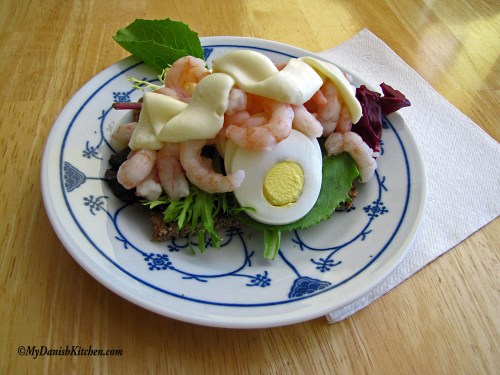
Sometime during the Fall Joe and I stopped in at one of my favorite stores IKEA to do some shopping. Of course we had to have lunch at Ikea…its a must, you know.  They had a wonderful piece of Smørrebrød loaded with egg and shrimp, simply delicious. And so this is my recreation of that wonderful piece of Smørrebrød. It has since then become a weekend lunch favorite at our house. Enjoy.

Ingredients:

1 slice Rugbrød (dark Rye bread)

butter (at room temperature)

lettuce

1 hard-boiled egg, sliced

salad shrimp

1 tablespoon lemon juice

salt and pepper

mayonnaise

Directions:

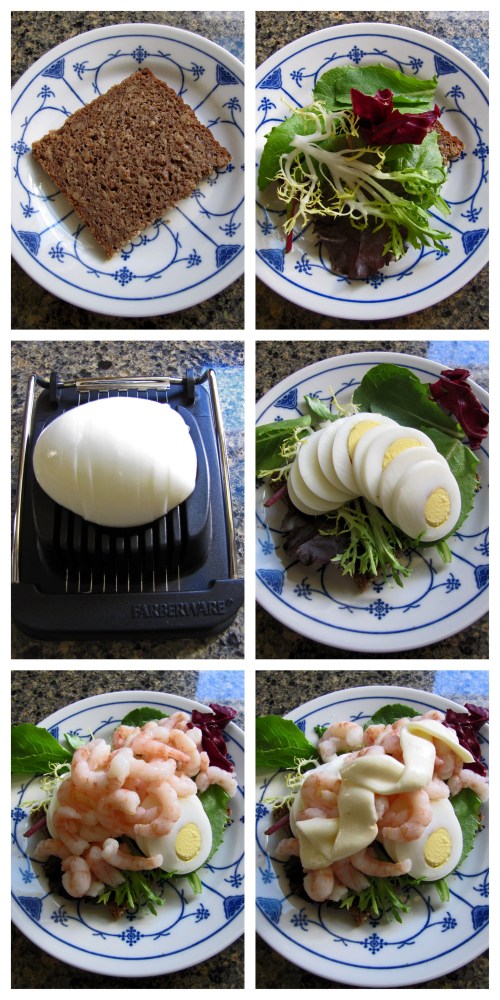
Place salad shrimp in a small bowl and toss with lemon juice, a pinch of salt and pepper. Spread a thin layer of butter onto rugbrød (if desired) and place lettuce on top. Then top with sliced egg, shrimp and mayonnaise. Enjoy.

Source: My Danish Kitchen

Print

Read Full Post »

Fastelavnsboller

Fastelavn is a Nordic holiday celebrated on Sunday or Monday before Ash Wednesday. It is similar to the American Halloween where children dress in customes and beg for candy. Some towns may have a parade followed by the traditional “slå katten af tynden” which is a wooden barrel that has cats painted on it and is filled with candy. The children takes turn hitting the barrel with a bat and the one to hit the bottom out, spilling the candy, is crowned “kattedronning” (queen of the cats). Hitting of the barrel continues and the one hitting down the last plank is crowned “kattekonge” (king of the cats).

If the children go door to door begging for candy they will come to the door and sing a little tune called Boller op, boller ned. This song basically says: Buns up, buns down, buns in my stomach, if I get no buns, then I will make trouble. The buns mentioned in the song is reffering to the Fastelavnsboller which is a popular pastry served on this particular day.

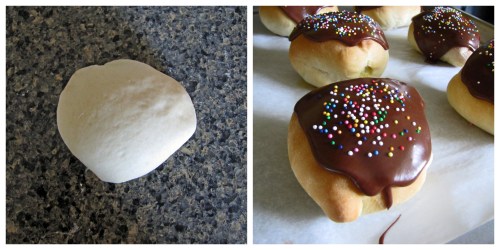
There are many different varieties of Fastelavnsboller recipes. Some is made from a Wienerbrød dough and some are a regular yeast dough. Some are prefilled with a custard or jam while others are sliced open and then filled with a custard or whipped cream filling. The Fastelavnesboller which I made here is a regular yeast dough which was prefilled with custard. I absolutely adore custard and would (if no one was watching) eat it by the spoonful. However, for these particular Fastelavnsboller which I choose to prefil and then bake, it turned out that the wonderful custard got almost completely absorbed into the bread and loosing its intensity. So next time I make this recipe I think I’ll prefil with jam instead because the jam still has its intensity even if some of it gets absorbed into the bread.

Ingredients:

Dough:

2 deciliter milk (1 cup)

25 grams butter (2 tablespoons)

50 grams cake/fresh yeast (or 4 teaspoons dry active yeast)

1 tablespoon sugar

1/2 teaspoon salt

1 egg

450-475 grams flour (3 3/4 cups)

1 additional egg for glazing (optional)

Custard filling:

1 vanilla bean

1 cup milk

2 egg yolks

2 tablespoons superfine sugar

1 tablespoon cornstarch

Jam filling:

your favorite jam (if using)

Chocolate icing:

1 cup confectioners sugar

2 tablespoons unsweetened cocoa

hot water

White icing:

1 cup confectioners sugar

hot water

Sprinkles for decorating

Directions:

In a small saucepan heat up milk and butter to finger temperature, melting the butter. Break up cake yeast and place  in a small bowl, pour warm milk over and stir to dissolve yeast. Add sugar, salt and egg, stir to mix. Add flour a little at the time, stir to combine. Note: it may not be necessary to add all the flour. Knead the dough until smooth. Leave dough in bowl and cover with a dry tea towel. Place in a warm location and let rise for 1 hour.

While dough is rising, make the filling. Cut vanilla bean in half lengthwise and scrape out seeds with the tip of a knife. Place vanilla seeds and milk in a small saucepan and bring to a boil. Meanwhile, beat the egg yolks and sugar together until pale in color and fluffy. Add cornstarch and mix together. While continuing to beat the eggs, slowly pour half of the hot milk into the eggs to temper it. Then pour the tempered egg mixture back into the saucepan and return to low temperature on the stove. Continue to whisk mixture over low temperature until the custard starts to thicken, making sure the custard does not boil. Remove from heat, place in a small bowl, cover with cling wrap directly on the custard surface to prevent a skin from forming and place in refrigerator to cool.

Line two large baking sheets with parchment paper and set aside.

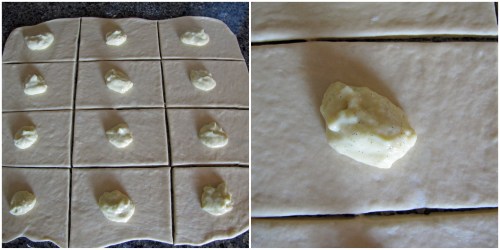
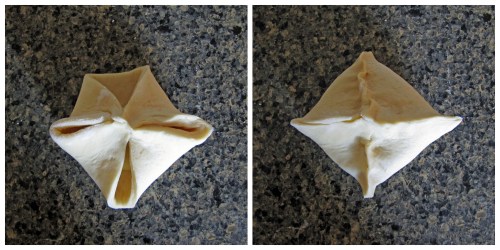
Lightly dust with flour and turn dough out onto the working surface. Knead dough a little until smooth and elastic. Roll out into a 40 by 40 cm square (15 x 15 inches) and cut dough into 12 pieces. Place a heaping teaspoonful custard or jam (if using) in center of each square. Using the leftover egg whites, brush the edges of the square dough to help seal the edges. Fold each of the four corners up to the center and press to seal all edges, letting the air inside escape. Turn the dough ball over, tuck under all edges and place on baking sheet with seam side down. Repeat with remaining squares. When done forming dough balls, cover with a dry tea towel and let rise for 30 minutes in a warm location.

Preheat oven to 190 degrees Celsius (375 degrees Fahrenheit). After dough has been allowed to rise, break open an egg and lightly beat it in small bowl. Brush egg-wash onto each dough ball before baking. Bake for 10-12 minutes or until golden brown. Allow to cool before icing.

To make icing, combine ingredients in a small bowl and mix until desired thickness (somewhat thick but spreadable). Spread icing onto each fastelavnsbolle and place sprinkles on top before glaze sets. Enjoy.

Source: dough from Lone Kjær – Hverdag de luxe and custard filling adapted from Trina Hahnemann – The Scandinavian Cookbook

Print

Read Full Post »

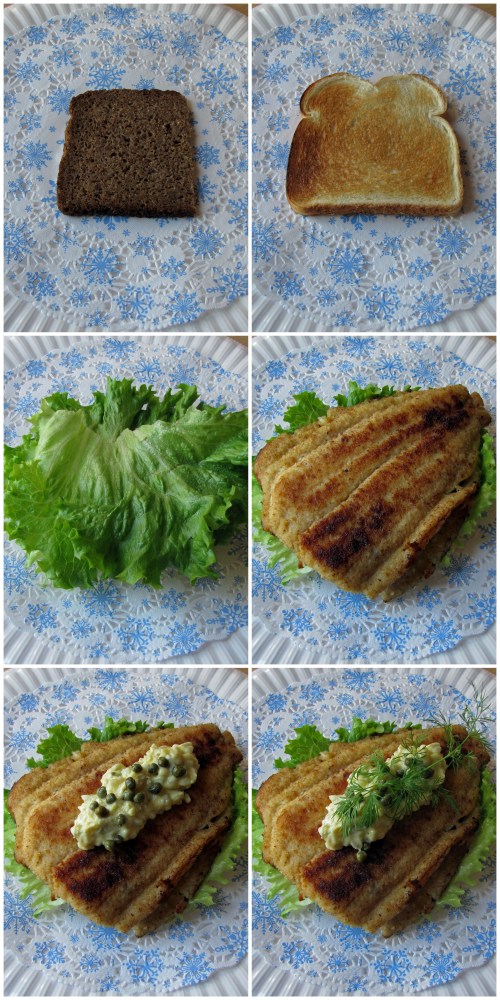
Smørrebrød – Fiskefilet

Smørrebrød is a very important part of traditional Danish cuisine. Basically it’s an open-faced sandwich which starts with the base of bread and butter and then it is topped off, in an artful fashion, with varying ingredients which compliment each other.

Ingredients:

For the Flounder Filet:

4 Flounder Filets (or however many you’re making)

1 egg, lightly beaten

plain bread crumbs

salt and pepper

extra virgin olive oil, for frying

For the Smørrebrød:

1 slice Rye bread, or toast if you prefer

butter, at room temperature

lettuce

flounder filet, hot off pan or warmed up

Remoulade (see recipe)

Capers

Dill, for garnish

lemon wedges

Directions:

Lightly beat the egg. In a shallow dish mix bread crumbs with salt and pepper. Dip each flounder filet in the egg, then turn the flounder in the bread crumbs covering both sides. Place oil in pan and heat to medium-high. Brown flounder on both sides and place on paper towel to absorb excess oil.

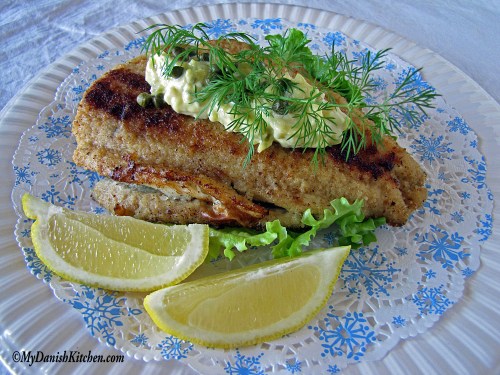
Butter bread (if desired). Top with lettuce, flounder, remoulade, capers and dill. Squeeze lemon over fish and enjoy.

Source: My Danish Kitchen

Print

Read Full Post »

Remoulade

Remoulade

Remoulade is a Danish condiment used to top off fish, hot dogs, open-faced sandwiches of varying kinds, even for dipping French Fries into. Whenever I travel back home to Denmark, Remoulade is one of the many food related items that fill my suitcase when I come back to the US. Then one day my good Danish friend Mona told me how to make it myself and it taste just like the real thing. It is similar in taste to a Tartar sauce, only sweeter and it’s really easy to make. Make sure to use a yellow mustard to give the Remoulade its distinct yellow color. Enjoy!

Sweet relish squeezed dry

Ingredients:

1 cup sweet relish

1 cup Hellman’s mayonnaise

3 teaspoons yellow mustard

1/2 teaspoon sugar

Directions:

Place relish onto a piece of cheese cloth or a clean kitchen towel, twist into a tight ball and squeeze out as much fluid as you can. Place squeezed relish into a small bowl and add mayonnaise, yellow mustard and sugar. Mix until well combined. Place in an airtight container and keep refrigerated until ready to use.

Source: my good friend Mona

Print

Read Full Post »

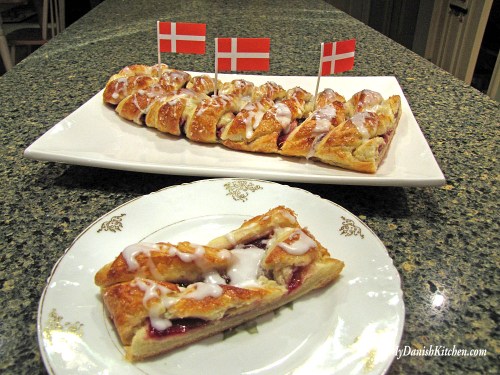
Danish Wienerbrød

A couple of years ago my husband and I attended a week-long seminar at the John C. Campbell Folk School in beautiful Brasstown, North Carolina. The school is based on the Danish design of a “Folkehøjskole” which is a non-competitive setup and emphasizing on teaching practical skills.  They offer classes in anything from Clay to Dance to Knitting to Music to Woodworking, and so much more. Your days at the Folk School are filled with many activities from sunrise to sunset, but although busy it is also relaxing and the school is set in an incredibly peaceful environment. Joe took Blacksmithing and I took Scandinavian Baking. The baking class was taught by Kim Hendrickson who was full of useful baking/cooking tips and who had answers to all of my 101 questions about yeast and baking techniques. It was a week filled with baking delicious treats, some of which I was familiar with and some which were new to me. I hope that Joe and I can one day go back to the Folk School for more classes for we had such a wonderful time there and we got to meet so many interesting people.

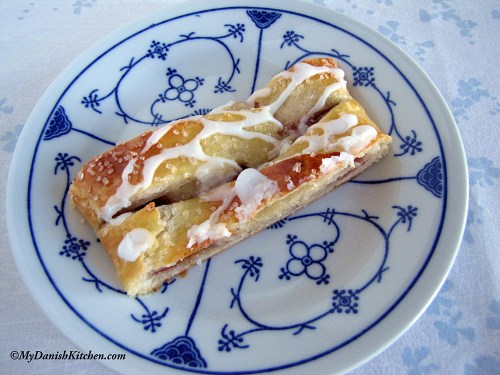
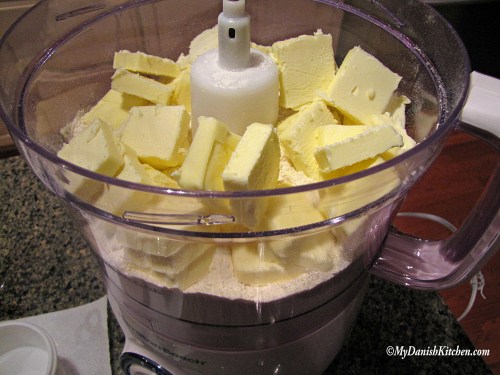
I have known Wienerbrød my entire life but I had never attempted to make it until my Folk School stay. Wienerbrød is a Danish specialty and outside of Denmark it is referred to as a “Danish”, but believe me, it is nothing like the Danish that you pick up at your local 7/11. Wienerbrød comes in many different shapes and with numerous types of fillings. There are two ways to make this dough, that I know of. The traditional way is to roll out the yeast dough, cover parts of it with thinly sliced butter, fold into numerous layers, roll out and repeat folding and rolling. This process of rolling and folding the dough with the butter is what gives the pastry a crisp and flaky texture. The second method is the “quick” method where flour and butter is combined in a food processor and pulsed until the butter is the size of kidney beans. You still have to roll and fold the dough several times and so I’m not really sure it’s any quicker, but the dough turns out perfectly. Wienerbrød is a time-consuming pastry to make but the outcome is super delicious and so if you decided to make it, I am confident that you won’t regret it. Please enjoy.

Update: This recipe makes 2 braids. You can easily freeze half of the dough for later use. Wrap dough in cling wrap, then wax or parchment paper and finally a freezer bag. When ready to use defrost in refrigeator.

Wienerbrød

Makes 2 pastry braids.

Ingredients:

3 1/2 cups flour (480 grams or 19.9 oz)

1 1/2 cups cold unsalted butter (345 grams or 12.2 oz)

4 1/2 teaspoons active dry yeast (or 50 grams cake/fresh yeast)

1/2 cup warm water (100 – 110 degrees Fahrenheit) (118 milliliter)

1/2 cup heavy cream (118 milliliter)

1/2 teaspoon cardamom

1/2 teaspoon salt

2 eggs, room temperature

1/4 cup sugar (55 grams or 1.9 oz)

Filling:

seedless raspberry preserves

Glazing:

1 egg, lightly beaten

2 tablespoons water

pearl sugar, for topping

sliced almonds, optional, for topping

Icing:

1 cup powdered sugar (100 gram or 3.5 oz)

2-3 teaspoons warm milk

1/2 teaspoon almond extract

Directions:

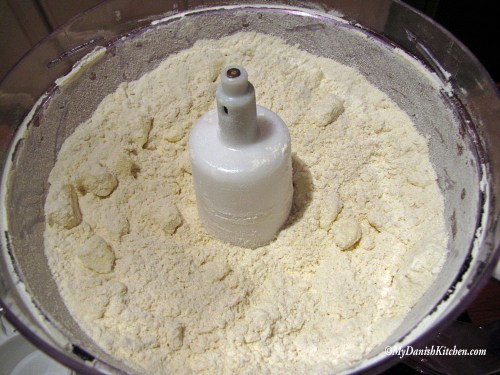
Place flour into bowl of food processor with steel blade. Cut butter into 1/4 inch slices and add to flour. Pulse flour and butter until the butter is the size of kidney beans.

In a large bowl, dissolve active dry yeast in warm water (between 100-110 degrees F). Let stand for 10 minutes. Stir in the cream, cardamom, salt, eggs and sugar. Using a rubber spatula, turn the flour/butter mixture into the liquid and carefully mix just until the dry ingredients are moistened. Cover and refrigerate for 4 hours, overnight or up to 4 days.

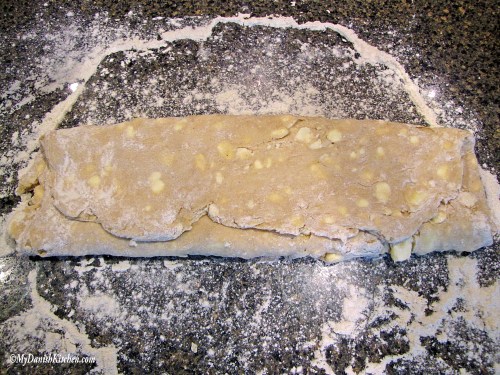
Turn the dough out onto a moderately floured surface. Roll out dough to make a 16 to 20 inch square. Fold dough into thirds, rotate dough a quarter of turn and fold into thirds again, making a small square. Turn over dough. Repeat rolling and folding another two times (making it a total 3 times of rolling and folding). Ending with a small square, wrap dough and chill for 30 minutes or overnight.

Preheat oven to 400 degrees Fahrenheit and line 2 baking sheets with parchment paper.

Divide the chilled dough into two parts. Roll each part into a 6 x 12 inch rectangle. (If not making both braids at the same time, wrap the second half of dough and place in refrigerator until ready to roll out).

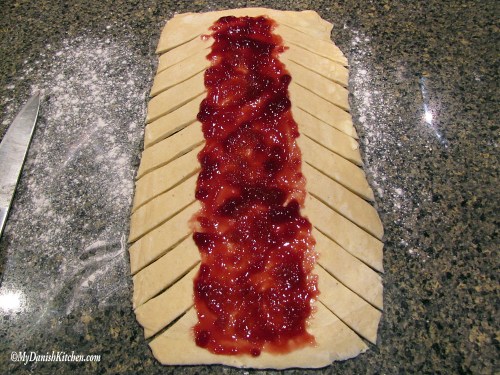
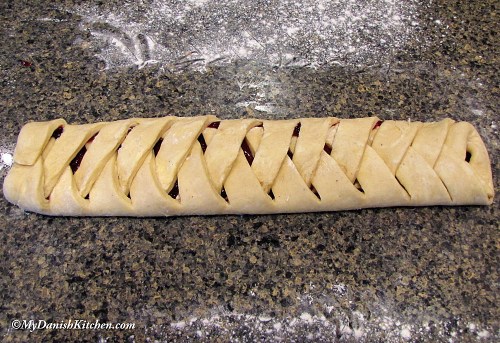
Spread filling down the length of center of each rectangle. Cut slanting strips at 3/4 inch intervals along both sides towards to center. Fold strips over the filling in a criss-cross manner. Place both braids onto baking sheets and let dough rise for 15-30 minutes until pastry appears puffy. It will not double in size. Lightly beat the egg and water for the glaze. Once dough has been allowed to rise, brush the pastry with the glaze. sprinkle with pearl sugar and/or almonds.

Bake 12-15 minutes or until golden brown. To make icing, mix together powdered sugar, warm milk and almond extract. Drizzle icing on top and let set before cutting. Enjoy!

Sliced butter and flour, pulse

notice butter is the size of kidney beans

fold dough into thirds, then into thirds again, roll out

place filling in center, make cuts slated towards center

fold strips in a criss cross manner

Wienerbrød

Wienerbrød

Source: Kim Hendrickson at J. C. Campbell Folk School

Print

Read Full Post »

Kanelsnegle

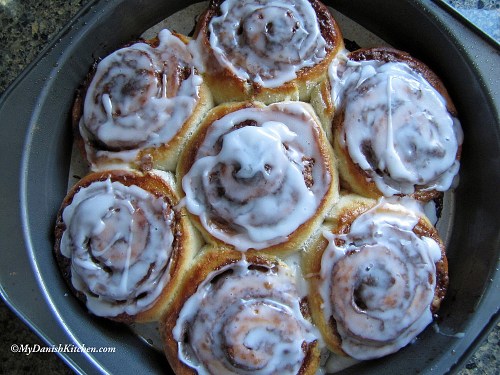
I made my first Kanelsnegle (Cinnamon Buns) in Home-Ed class. Does any high schools offer Home Education classes anymore? The class gave me a basic knowledge of cooking and baking. It sparked an interest for baking in particular and I baked quite a bit when I was a teenager. This is still something that I truly enjoy. By the way, I also took woodworking, but no sparks came from that class ha ha 🙂

Rolling up dough

Kanelsnegle ready for baking

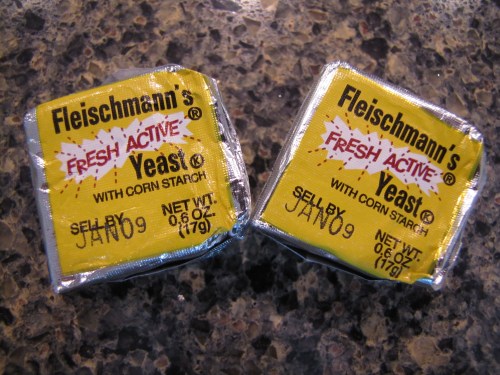
Just a note about yeast. In Europe the preferred type of yeast is Fresh Active Yeast as compared to the American preference of Dry Active Yeast. Fresh yeast (also called Cake yeast or Bakers compressed yeast) can sometimes be found in the dairy section of certain grocery stores. It has a short expiration date and so it’s very perishable but works faster and longer. Fresh yeast is dissolved in liquid 70-80 degrees F. Store it in the refrigerator or freeze for up to 4 months. Dry yeast on the other hand has a much longer expiration date and is more forgiving of mishandling. To activate it sprinkle on water that’s between 100-110 degrees F and wait to see small bubble (about 10 minutes). Note if your liquid is too warm you’ll kill the yeast and adding a teaspoon of sugar to the liquid will provide a little food for the yeast, encouraging it to “wake up”. Typically, 50 grams of Fresh yeast = 4 teaspoons Dry yeast (12 grams).

Fresh active yeast

Ingredients:

25 grams Fleischmann’s Fresh Active Yeast

2 1/2 deciliter milk (1 cup)

2 tablespoons vegetable oil

1 tablespoon sugar

1 teaspoon salt

1 teaspoon cardamom

400 grams flour (3 1/2 cups)

small amount of oil for the bowl

plus 1 egg for brushing cinnamon buns

Filling:

75 grams butter at room temperature (5 tablespoons)

75 grams sugar (1/2 cup)

2 tablespoons cinnamon

50 grams marzipan (about 1/4 cup) (optional)

Glaze:

1 cup confectioners sugar

1-2 tablespoons hot water

Directions:

Dissolve yeast in cold milk stirring gently. Add oil, sugar, salt and cardamom. Add flour a little at the time and knead until you have a firm dough. Place a small amount of oil in the bowl and turn the dough in the bowl. Cover bowl with plastic wrap and let dough rise to double in size (30-60 minutes).

Place room temperature butter, sugar and cinnamon in a small bowl. If you’re using marzipan, break it up into small pieces and mix into butter using a fork to help break it up a little.

Prepare two round 8 inch baking pans by placing a round piece of parchment paper in bottom of pan and spray with non-stick oil. Or you can place parchment paper on a baking sheet.

Sprinkle tabletop with flour and roll out dough to 40 x 50 centimeter (15 x 19 inches). Spread butter filling onto dough and roll into a log starting at the long edge. Cut dough into 14 even slices. If using round baking pans, place cinnamon slices in a circular fashion – 7 slices in each pan. If you using a baking sheet, place cinnamon slices right next to one another. By placing slices close to one another during baking is keeps the finished cinnamon buns moister. Cover baking pans or baking sheet with a dry kitchen towel, place in a warm location and allow to rise for another 30 minutes.

Preheat oven to 225 degrees Celsius (about 425 degrees Fahrenheit). Bake for 12 to 15 minutes. Let cool for 5-10 minutes before glazing. To make glaze, simply combine confectioners sugar and water until desired consistency. Enjoy!

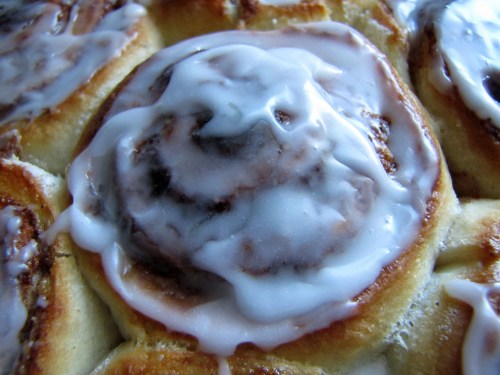
Kanelsnegl

Source: Signes Mad

Print

Read Full Post »

Marmorkage

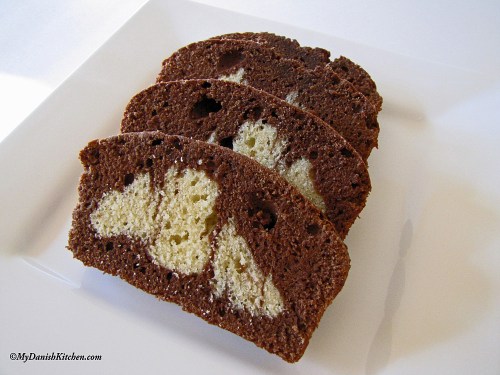
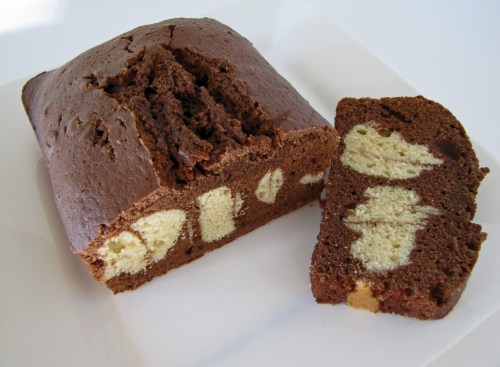
This cake was the very first cake I learned to bake and I made it quite often when I was a young girl. It was my favorite cake at that time. It had been years since I last baked this cake that I had almost forgotten about it. Then when I played the blogging game “Tag” I was reminded of it and I decided it was time for a revisit. This version of Marmorkage is a dense cake which is not overly sweet. The original version has more white cake than chocolate, but since I love chocolate I always reverse it.

Marmorkage

Ingredients:

130 gram salted butter (1 stick plus 1 tablespoon)

200 gram sugar (1 cup)

3 eggs

1 teaspoon baking powder

250 gram flour (2 1/4 cup)

1 deciliter milk (1/2 cup plus 2 tablespoon)

6 tablespoon cocoa

Directions:

Preheat oven to 170 degrees Celcious (340 degrees Fahrenheit). Coat loaf pan with butter and dust with flour, shake out excess flour and set aside.

Place butter in small saucepan and melt over low heat. Once melted, place in a mixing bowl, add sugar and mix well. Add eggs one at a time and mix well. Stir flour and baking powder together. Add flour and milk in small increments until incorporated. Remove 1/3 of dough to a small separate bowl, this will remain the white colored dough. To the remaining 2/3 dough, add cocoa and stir until well blended.

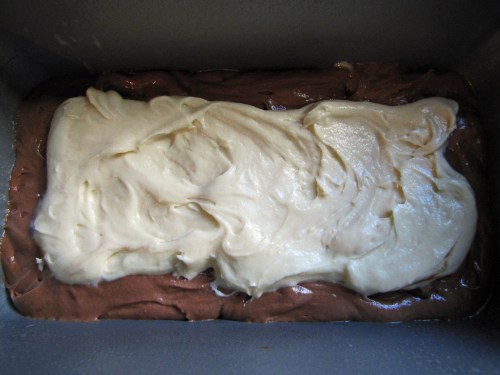
Place 1/2 of cocoa dough in bottom of loaf pan, add white dough, then add the remaining cocoa dough as the top layer. Take a fork and run it up and down the dough layers a couple of times to create a marbeling effect. Bake in preheated oven for 1 hour 15 minutes or until a toothpick comes out clean. Enjoy.

Chocolate and white dough, top off with chocolate dough.

Source: My Danish Kitchen

Print

Read Full Post »

« Newer Posts - Older Posts »