Feeds:
Posts
Comments

Archive for 2012

Kransekage Bites

The last day of the year has arrived and I wish all of you a Happy New Year and since it’s New Years Eve today lets wrap up the year with some traditional Danish Kransekage.

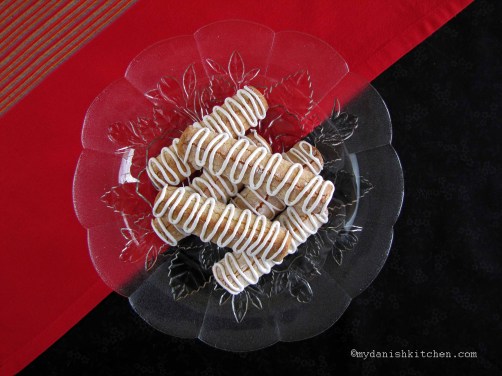
Kransekage is a classic Danish pastry made with Marzipan. It is often eaten for New Years, Weddings, Anniversaries, Baptisms – occasions when a celebration is in order. Kransekage can sometimes be made into quite elaborate presentations such as my Anniversary cake but other times they are made as small triangular bite-size pieces of Kransekage, equally delicious!

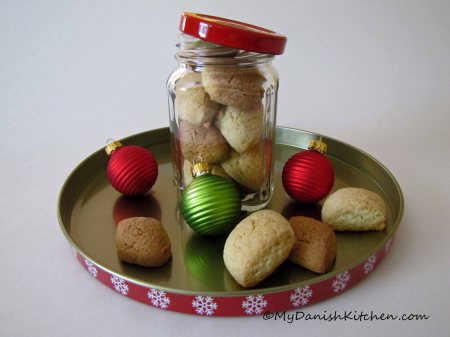
You can also make them into small Kransekage Tops as in the picture at the bottom of the page. If you choose this, don’t refrigerate the marzipan dough as it will be softer and more manageable at room temperature. Place dough in a pastry bag with a large star tip, but I have to forewarn you that it will take a lot of strength to press the dough out of the pastry bag onto the parchment paper. Another thing you can do to your Kransekage, which I did not do here, is to dip the bottom in some chocolate. Very delicious! I hope you have a safe and happy New Year. 😀

Kransekage Bites (makes 10-12 pieces)

Ingredients:

Cake:

250 gram Marzipan (cut into slices)(8.8 oz or 8 3/4 oz)

75 gram confectioners sugar(2.5 oz or 2 3/4 oz)

20 gram pasteurized egg whites(0.7 oz or 3/4 oz)

Glaze:

40 gram confectioners sugar (sifted),( plus more if needed)(1.4 oz)

15 gram pasteurized egg whites(0.5 oz)

Directions:

For the Cake: In a stand mixer with the paddle attachment, place 75 grams confectioners sugar and 20 grams pasteurized egg whites. Start the mixer on low and add marzipan pieces one by one. When the cake mass is homogeneous, remove from mixer and place in a zip lock bag. Store in refrigerator for at least 2 hours or until the following day.

Double up two large baking sheets for extra insulation to avoid burning the bottom of cake. Use parchment paper. Preheat oven to 390 degrees F (200 degrees C).

Note: when rolling out marzipan, wash and dry your hands as often as needed to avoid working with sticky fingers. If marzipan feels too sticky use a small amount of confectioners sugar to work into dough. Sprinkle work surface lightly with confectioners sugar. Roll dough into a long log approximately 1 1/2 cm (0.6 inch) in thickness. Cut log into finger length pieces (8 cm/3 inches). With two fingers lightly pinch and press down on each log piece to form a soft triangular-shape. If needed, use an icing spatula or a regular spatula to loosen marzipan from tabletop by pressing down hard while sliding spatula under the log. Place each triangular log on parchment paper and bake for 14 to 18 minutes or until golden brown. Allow logs to cool completely on a rack.

For the glaze: Beat together sifted confectioners sugar and pasteurized egg whites on high-speed for at least 5 minutes. The glaze should be pretty thick and no longer flow together when beaters are stopped. Add more sifted confectioners sugar as needed. Load glaze into a plastic bag and snip off tip to create a very tiny opening. Begin decorating, moving the tip back and forth across the logs making sure to extend the tip out over the edge to allow the glaze to droop down the outside in a loop style fashion. Allow glaze to dry at room temperature for a couple of hours before storing Kransekage Bites in an airtight container. Enjoy.
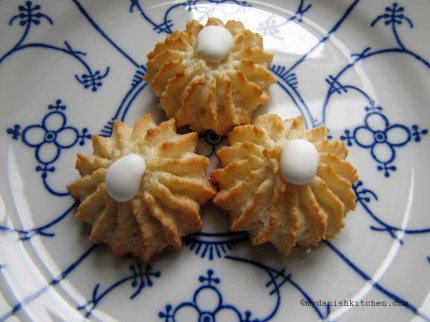
Kransekage Tops

Source: My Danish Kitchen

Print Friendly and PDF

Read Full Post »

With the end of the year quickly approaching I thought it would be fun to do a review of the most popular posts for 2012 (starting with the most popular). The outcome does not surprise me at all since the majority of my readers are Danes living outside Denmark or Americans with Danish heritage. The top posts are the classic Danish dishes, the ones that we miss, the ones that are etched into our memories and the ones that we grew up with.

I wish to extend a sincere Thank You to all of my readers as you help me keep in touch with Danes, Denmark and all the wonderful Danish foods. Godt NytÃ¥r til jer alle, Happy New Year to all of you and here’s to you…SkÃ¥l and Cheers!

Ris a la mande

Ris a la mande

IMG_5335 ew

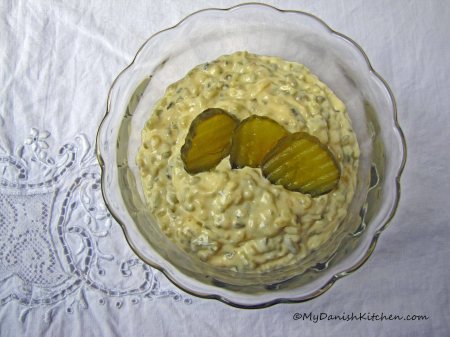
Remoulade

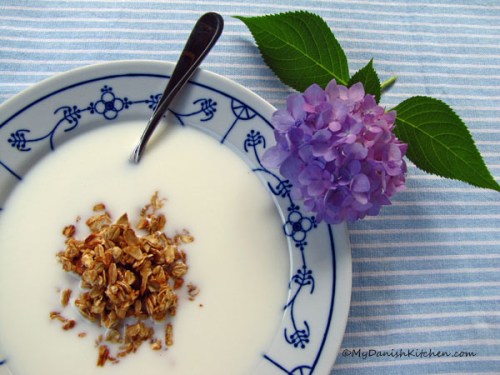
Danish Koldskål

Koldskål

Risengrød ew

Risengrød

Wienerbrød ew

Wienerbrød

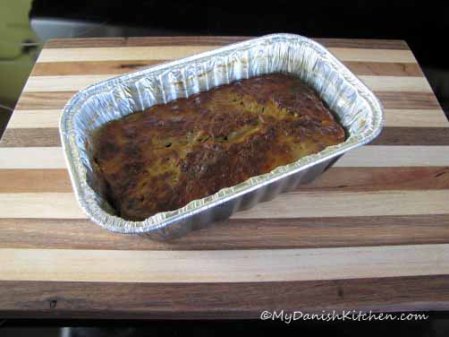
Leverpostej ew

Leverpostej

Pebbernødder ew

Pebernødder

Easy Cheese Danish ew

Easy Cheese Danish

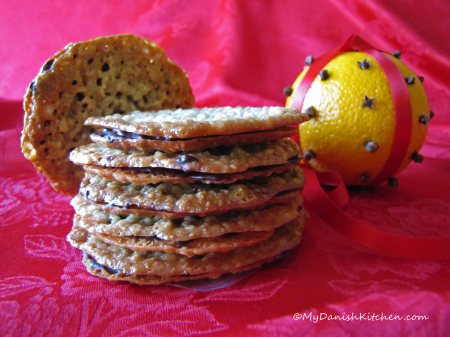
Florentine ew

Florentine

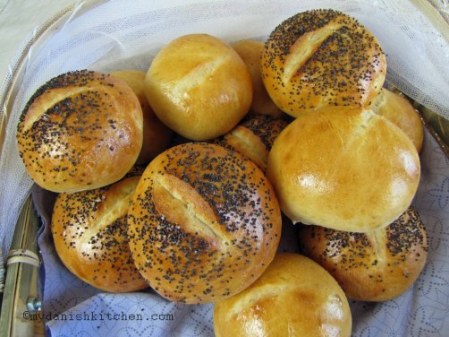
img_3425e1

Rundstykker

Read Full Post »

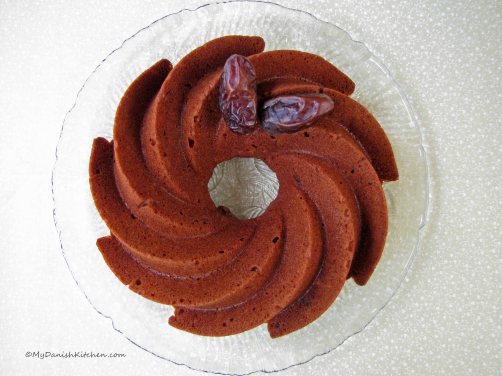
Finnish Date Cake

First off, I would like to wish all of my readers a very Merry Christmas and Glædelig Jul. I hope your Christmas is filled with peace and joy 🙂 I feel a bit guilty that I am not posting something Danish here on my blog on Christmas Eve. I could have, but I chose not to because this Finnish cake is so spectacular and so deserving for a Christmas Eve post. So here is the Taatelikakku in all its glory, you wont regret it should you decide to try it out.

I am learning that the Finnish has a lot to offer when it comes to baked goods and this Date Cake is no exception. It is soft, moist and spongy with a delicate Date flavor and not overly sweet. The dough comes together easily in a cooking pot, so very few dirty dishes…I like that 🙂 The original recipe did call for a 4 cup bunt tin, which I don’t have. But I simply just used a standard 8 cup tin and filled it up half-way and it worked out just fine. I can’t say enough good things about this Date cake and it will definitely not be the last time that I make it, besides, I gotta make use of my cool-looking bunt tin.

Finnish Date Cake

Taatelikakku – Finnish Christmas Date Cake (serves 8-10)

Ingredients:

1/2 cup cold coffee

85 gram butter (3 oz.)

200 gram all-purpose flour (7 oz.)

1 teaspoon baking powder

130 gram dates (4.6 oz.)

90 milliliter water (3 oz.)

110 gram sugar (3.9 oz.)

1/2 teaspoon baking soda

1 teaspoon vanilla extract

1 egg

Directions:

Spray bunt tin with baking spray and set aside. Preheat oven to 170 degrees C (335 degrees F).

If you don’t already have coffee prepared, make coffee and set 1/2 cup aside to cool. Melt butter and set aside to cool. Sift flour and baking powder together, set aside. Break dates into small chunks and remove pits, place in a medium size saucepan. Cover dates with water and add sugar, heat until sugar has dissolved and dates are starting to soften. Remove from heat and cool for 5 minutes. Add baking soda to dates and stir. Add cold coffee and vanilla extract to date mixture. Add melted butter to dates and stir well. Then add the egg and stir to combine. Finally add the flour and stir until mixture is a smooth consistency. Pour batter into prepared bunt tin and bake for 30-35 minutes or until a toothpick comes out clean, careful not to over-bake. Enjoy!

Finnish Date Cake

Source: Melanger

Print Friendly and PDF

Read Full Post »

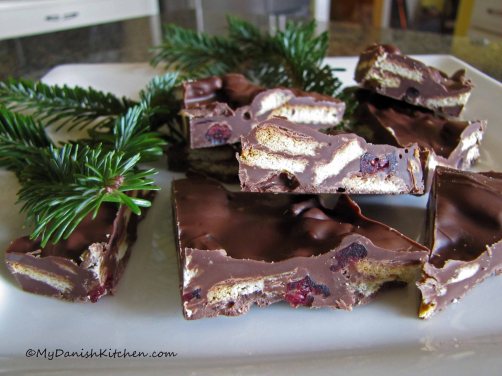
Homemade Crunchy Chocolate

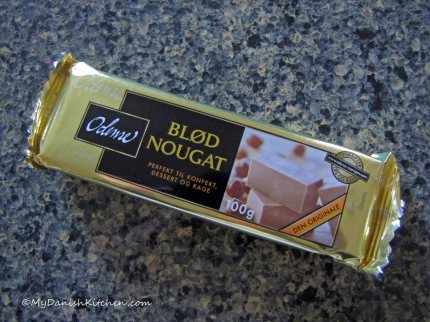
Danes love to make many different types on confections (konfekt) around Christmas time. They are small delectable treasures and usually pretty easy to make. This one is super quick and easy and I adore the slight crunch from the biscuits and the hint of cranberries. It reminds me of my Kiksekage, which I looove, only this is in small bite-size pieces. However, it does contain nougat which I have never seen in a regular grocery store here where we live. So the only way for me to get nougat is to order it online, but it is well worth it 🙂

Homemade Crunchy Chocolate

Ingredients:

200 grams semi-sweet or milk chocolate (7 oz)

100 grams nougat (3.52 oz)

50 grams biscuits (1.76 oz)

30 grams dried cranberries (1 oz)

Directions:

Over a warm water bath, melt nougat and chocolate. Remove bowl from water bath and break biscuits into small pieces, add to melted chocolate. Add dried cranberries and gently stir to moisten and combine all pieces. Line a small container with parchment paper allowing paper to extend over edges for easy removal of chocolate. Pour chocolate mixture into container and place in refrigerator for two hours to cool and set. Glædelig Jul and Merry Christmas!

Nougat

Source: adapted from Odense Marcipan

Print Friendly and PDF

Read Full Post »

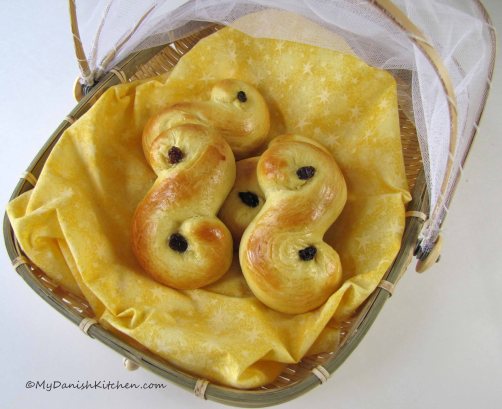
Lussekatter

Lussekatter mark the beginning of the Christmas season in Sweden and is served on December 13th. This day is St. Lucia and it’s a day which brings light into the winter darkness. St. Lucia is celebrated with a parade of girls dressed in white, carrying candles in their hands and the leading girl has a crown of candles on her head. It’s a very beautiful tradition and you can see more of it here.

In Denmark we inherited the St. Lucia tradition but not the Lussekatter, so these buns are new to me and I must say that they are super delicious when served warm right out of the oven. They have a sweet Saffron flavor and the most beautiful golden color. The down-side to the Lussekatter is that they don’t keep well and they really should be eaten the same day they are baked. However, if they feel a little hard by the end of the day you can soften them up by putting them in the microwave for 10 to 15 seconds and they will still be very delicious.

Lussekatter (makes 10 buns)

Ingredients:

100 grams butter (3.5 oz.)

0.75 gram saffron

4 1/2 teaspoons dry active yeast (50 grams cake/fresh yeast)

200 milliliter milk (6.7 oz.)

50 milliliter heavy whipping cream (1.6 oz.)

100 milliliter sugar (3.4 oz.)

1/2 teaspoon salt

1 egg

1/2 kilogram all-purpose flour (17.6 oz.)

1 egg, for egg wash

raisins (20 large)

Directions:

Line two baking sheets with parchment paper and set aside.

Melt butter and set aside.

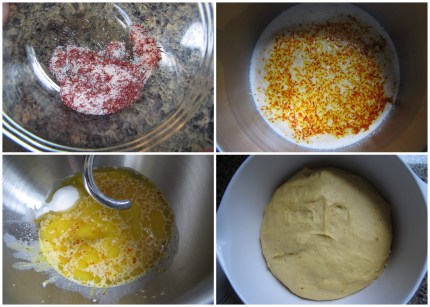
Place saffron strands in a small dish and add a very small amount of the sugar. With the back of a spoon smash the saffron and sugar to break the saffron strands into smaller pieces. Set aside.

Heat the milk and cream to 100-110 degrees F (do not exceed 110 degrees). Add the dry yeast and saffron to the warm milk, stir to combine and let sit for 10 minutes.

In the bowl of your mixer fitted with the dough hook, add milk mixture, butter, sugar, salt and egg, start the mixer. Add flour in small increment, continue to mix until dough comes together. Do not over-mix. Transfer dough to a clean bowl, cover with a clean, dry tea-towel and let rise for 45 minutes.

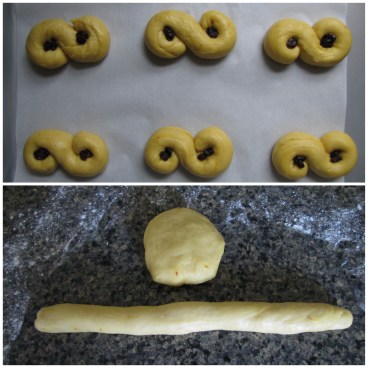
Divide dough into 10 equal portions. I used my scale for this, making sure each dough ball weighed between 80-100 grams. Roll each dough ball into a long rope measuring 9 inches. Fold each rope into a tight backwards “S” figure and place on baking sheet. Press a large raisin into the middle of the swirl in each end of the dough. Cover dough with a clean, dry tea-towel and allow to rise for another 15 minutes. Preheat oven to 390 degrees F (200 degrees C).

Beat 1 egg to make an egg-wash. Press each raisin down half-way into the dough to ensure they don’t get pushed up and out during baking. Brush each bun with the egg wash. Bake for 8-10 minutes. Do not over-bake. Enjoy Lussekatter warm.

Source: adapted from Anne’s Food

This recipe will be submitted to YeastSpotting, a great site filled with Wild Yeast recipes.

Print Friendly and PDF

Read Full Post »

Brunkager

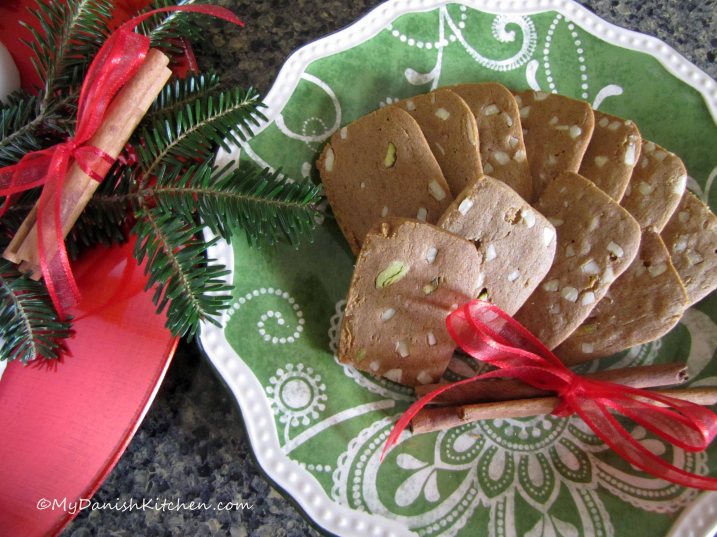
Brunkager

This year I decided to try out a new recipe for Brunkager. I view this recipe as a more modern Brunkage in that, the finished product is a small rectangular cookie instead of the traditional round shape and it has pistachios in addition to almonds. The cookies are very flavorful and delicious and the only problem I had was with the aesthetic outcome. I was not able to find any whole almonds and pistachios, all I could get was almond slivers and unsalted pistachio halves and pieces. Of course now that it’s all said and done I finally found the right kind of nuts…bummer… oh well. As far as the almonds, use what you have, but whole would be perfect. But for the pistachios, I would recommend that if you cannot get whole then don’t bother with it because it really wont give you the beautiful green “wow” effect that whole pistachios would provided.

This recipe also uses Potaske which is a leavening agent commonly used in some Danish baked products. Potaske can be substituted with Baking Soda which is what I used in my previous Brunkager recipe. If you use Baking Soda you can omit the 1 tablespoon cold water. Simply just mix the Baking Soda in with the dry ingredients.

I hope you enjoy these cookies, they are a wonderful addition to any Christmas repertoire.

Brunkager II

Brunkager (makes approx. 110 cookies)

Ingredients:

250 gram butter (8.8 oz.)

125 gram dark syrup (4.4 oz.)

250 gram dark brown sugar (8.8 oz.)

2 teaspoon potaske

1 tablespoon cold water

3 teaspoon ground cinnamon

1 teaspoon ground cloves

2 teaspoon ground ginger

1 teaspoon ground allspice

500 gram all-purpose flour (17.6 oz.)

30 gram whole unsalted pistachios (1 oz.)

120 gram whole blanched almonds (4 oz.)

Directions:

Using a 20 x 20 centimeter (8 x 8 inch) container, cut 2 pieces of parchment paper to fit inside the dish without it crimping up in the corners. Place parchment paper in a cross fashion with paper extending over the edges. Set aside.

Place butter, syrup and brown sugar in a sauce pan and melt over medium-high heat. Once ingredients are melting, whisk vigorously until it comes together. Remove from heat.

Combine potaske and water, set aside. Combine flour, cinnamon, cloves, ginger and allspice in the bowl of a stand-mixer fitted with the hook attachment. Add potaske/water mixture to the warm butter/syrup mixture. Pour the warm butter/syrup mixture into the flour mixture and mix until a homogeneous mass. Add pistachios and almonds and continue mixing until combined.

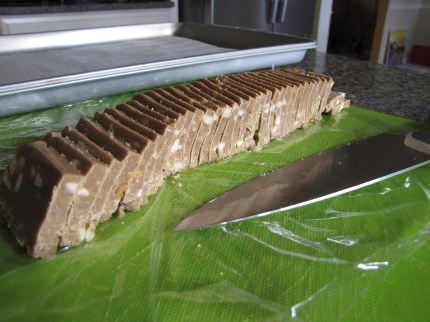
While batter is still warm, pour into dish lined with parchment paper and press the mixture into corners and flatten. Cut another piece of parchment paper to fit and place on top of dough. Fold overhanging edges of paper in over batter and allow to cool at room temperature until the following day. Next day, remove dough from dish and cut into 4 logs. If you plan on baking the cookies at this point, cut logs into thin slices and place on baking sheet lined with parchment paper, leaving a 1 inch space between cookies. Bake in a 180 degree C (350 degrees F) preheated oven for 9 – 12 minutes. Allow cookies to cool completely before placing in a cookie tin with a tight fitting lid.

If you plan on baking cookies on a later date, wrap each log tightly in plastic wrap, place in a zip-loc bag and store them in refrigerator for 1-2 weeks. Flavors will continue to develop as dough sits. Once ready to bake, allow dough to come to room temperature before slicing and baking.  Merry Christmas and Glædelig Jul.

Brunkager ready for baking

Brunkager ready for baking

Source: adapted from Det Søde Liv

Print Friendly and PDF

Read Full Post »

Sukkerkringler

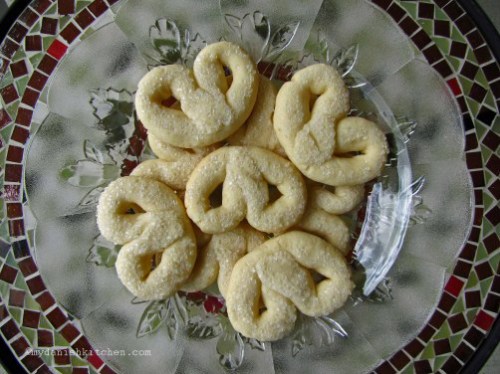
In Denmark, the word Kringle refers to the knotted pretzel shape and Danes use this shape for many different baked goods like pastries, breads and cookies. The Kringle symbol has a long history in Denmark and it’s the guild sign for the Danish Baker. Even today, it is often displayed as a golden kringle outside the modern Danish Bakery Shop.

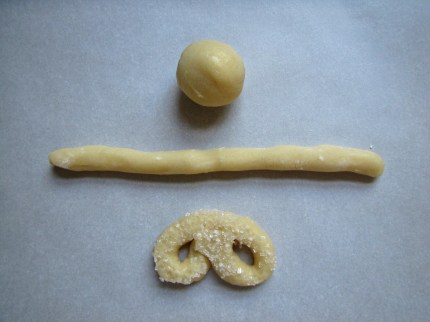
Form into ball the size of a walnut, roll to 6 inches long, shape as a pretzel and dip in sugar.

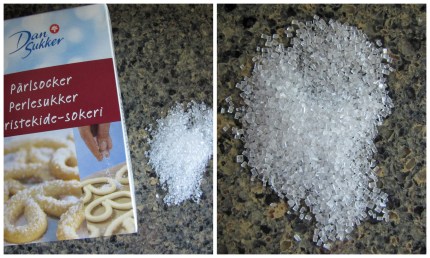
The Sukkerkringle is a Christmas cookie made in the traditional kringle shape. The dough is very quick and easy to make but the shaping of the cookies does require a little bit of patience (this would be a great activity for the teenager in your house :)) The cookie is soft and delicate and dipped in pearl sugar. The pearl sugar is a bigger sugar crystal which I have found online, however, if you don’t have it in your house you can use crushed sugar cubes and if you don’t have sugar cubes then just use a light coating of regular sugar…you get the idea.

Pearl sugar

Sukkerkringler

Ingredients:

3 cups all-purpose flour

1 cup salted butter

1 teaspoon baking powder

1 egg

1/2 cup heavy whipping cream

Pearl sugar for decoration

Directions:

Line two large baking sheets with parchment paper and set aside.

Place flour, butter, baking powder, egg and whipping cream in a food processor or a large bowl. Mix until combined and a ball of dough is formed, careful not to over-mix. Wrap dough in plastic wrap and place in refrigerator for 30-60 minutes.

Preheat oven to 350 degrees F (175 degrees C). Place a small amount of pearl sugar onto a small plate and set aside.

Remove cooled dough from refrigerator and divide into pieces the size of a small walnuts, roll into balls. Sprinkle a very small amount of flour onto your work surface if needed and roll each ball into a 6 inch long rope. Take each end of the dough and curl them up onto the middle of the dough, forming a pretzel shape, gently press a finger into the seam to seal the edges. Lift up the pretzel and place upside down into the pearl sugar, press down gently to make the sugar stick. Place sugar side up onto baking sheet, reshape a little if needed. Bake in the middle of oven for 10-12 minutes. Allow to cool completely before storing cookies in a cookie tin. Enjoy!

Source: The Great Scandinavian Baking Book

Print Friendly and PDF

Read Full Post »

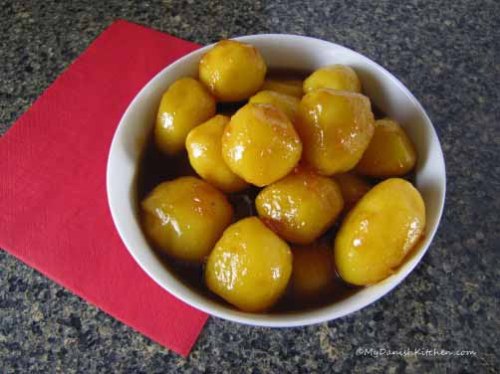
Brunede Kartofler – Caramelized Potatoes

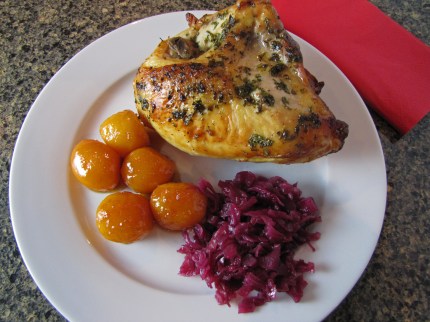
Brunede Kartofler is a classic Danish side dish which was always served with Christmas dinner when I was a child.  Of course it was also served occasionally at other times but I think probably most Danes associate the dish with Christmas in particular. The sweetness of the caramelized potatoes is wonderful with the other classic side dish Rødkål (sweet and sour red cabbage) which is slightly tangy and the two dishes are often found on the same table.

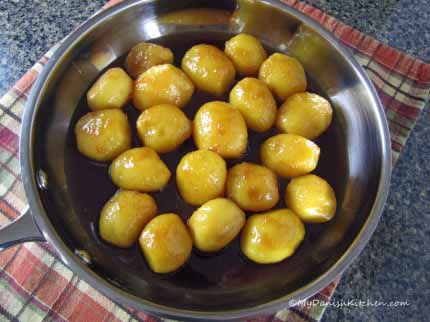
When making Brunede Kartofler make sure to watch the sugar so it doesn’t burn and when you add the butter it will bubble up briefly, so please be very careful.

Caramelized Potatoes

Brunede Kartofler

Ingredients:

potatoes (approx 20 small white)

1 cup sugar

5 tablespoon butter

Directions:

Boil potatoes in salted water until fork tender. Drain potatoes and place in refrigerator to cool. Once potatoes are cold, remove peel. In a pan over medium-low heat melt sugar. Watch sugar carefully so it does not burn. When sugar has melted add butter, please note that it will bubble up, stir to combine. Add potatoes and cook low and slow, gently stirring occasionally until potatoes are warmed through. Enjoy!

Source: My mother Åse Frandsen

Print Friendly and PDF

Read Full Post »

Red Cabbage

With the holidays quickly approaching it’s time to revisit some classic Danish dishes. RødkÃ¥l is a side dish that is always on the table for Christmas dinners and luncheons but of course it is also served at other times. For me though, the sweet and sour aroma with a hint of cloves in the background reminds me of Christmas and it will perfume your house in the most warm and pleasant of ways. The dish itself is very quick and easy to assemble and the remainder of the time is spent simmering away on the stove.

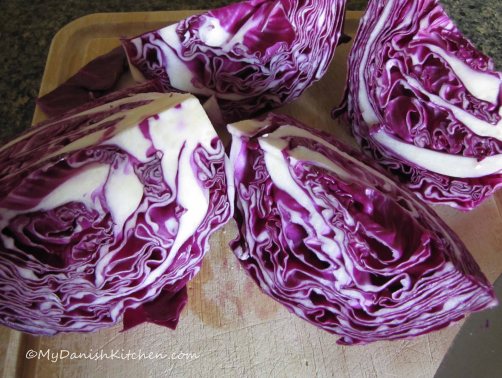
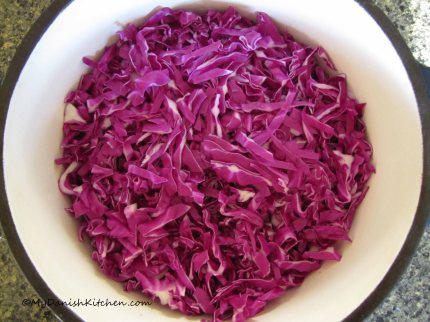
Sliced red cabbage ready for cooking

I have been experimenting with this recipe for some time now and I finally got it right (that’s according to my tastebuds of course :)). The traditional way to make RødkÃ¥l is to use Ribssaft (Red Currant juice) but it’s impossible to find it in any of the stores around here, so I am substituting it with 100% Pomegranate juice.

The first time I made RødkÃ¥l the ratio of vinegar to pomegranate juice was off with too much vinegar. The second time I could not find any pomegranate juice so I used cranberry juice instead…bad idea. It left a really dry taste in my mouth. In the meantime, my parents came to visit and they brought real Ribssaft with them but it was confiscated going through customs. (Still unclear as to why they couldn’t bring it in, maybe the size of the bottle?) Anyway, two cabbage heads later and with real pomegranate juice and less vinegar, we finally have a winner!

Rødkål

Ingredients:

1 head red cabbage

1 deciliter apple cider vinegar (3.4 oz.)

2 deciliter pomegranate juice (or red currant juice = ribssaft) (6.8 oz.)

3 – 4 tablespoons sugar

1/2 tablespoon salt

1 1/2 teaspoons ground cloves

1 tablespoon butter

Atamon for rinsing glasses

Directions:

Remove outer leaves of cabbage, cut into quarters, remove the tough white core and discard. Slice cabbage into desired thickness. Place cabbage  into cooking pot and add vinegar, juice, sugar, salt and ground cloves. Let it simmer covered for 3 hours, stirring occasionally. At the end of cooking time add the butter and gently stir until melted. If cabbage is to be used fairly quickly, simply just sterilize jars and lids with boiling water. If cabbage is intended for storing away, rinse jars and lids with Atamon. Store in cool, dark place. Enjoy!

Source: My Danish Kitchen

Print Friendly and PDF

Read Full Post »

Mandelmusslor

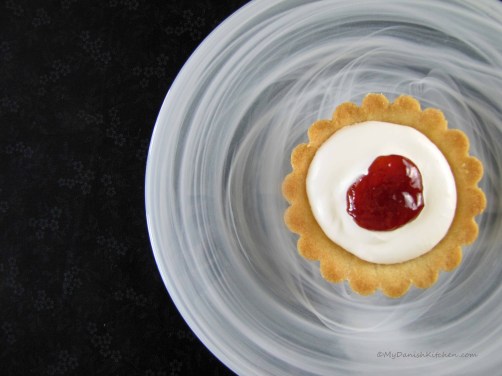
Mandelmusslor is a Swedish dessert which is a delicate little morsel but big enough to satisfy your sweet craving. The shell is crisp and has a wonderful sweet almond flavor which is nicely contrasted with the soft and cool whipped cream and strawberry preserve. I choose to use a strawberry preserve here but you can certainly use any flavor you like.

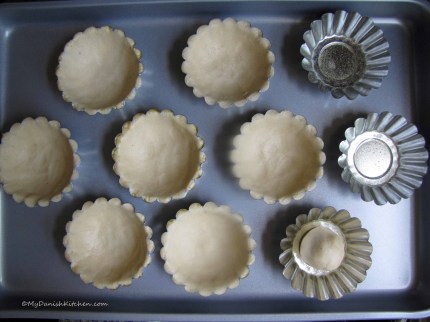
Pressing dough into shells

This is not exactly a quick and easy dessert to make. It is a bit tedious pressing the dough into the tins, however, the Mandelmusslor can be made ahead of time and stored in a cookie tin so when you are ready to serve them, it’s very quick to whip up the cream and top with a teaspoon of jam. Viola, dessert anyone?

Let Mandelmusslor cool upside down

Word of advise, make sure tins are greased very well and when you go to remove them from the tins try to “bang” them straight down onto the baking sheet to release them. It may take just a couple of tries.

Mandelmusslor (makes 18)

Ingredients:

100 g margarine (3.5 oz.), at room temperature

150 g unsalted butter (5.3 oz.), at room temperature

150 g sugar (5.3 oz.)

1 teaspoon almond extract

30 g ground almond meal (1 oz.)

360 g all-purpose flour (12.7 oz.)

Filling:

1 pint (16 oz.) heavy whipping cream

Strawberry preserves (or use whichever is your favorite flavor)

Directions:

Beat margarine, butter and sugar until soft and smooth. Add the almond extract and the almond meal. While continuing to beat the mixture, add the flour in small increments until the dough comes together.

Preheat oven to 390 degrees F (200 degrees C)

Prepare tins by generously spraying them with baking spray. Pinching off a ball of dough the size of a small golf ball and press the dough into greased tin. You want the dough to be a pretty thin layer. Place tins on a baking sheet and bake for 8-10 minutes or until golden.

After tins are pulled out of the oven, using your oven mitts or a tea towel, turn the tins upside down on the baking sheet and let sit for a couple of minutes. Then lift tins up (careful tins will still be hot) and drop them firmly down onto the baking sheet to release the Mandelmusslor from the tins. Let the pastries cool upside down to maintain their shape.

For the filling: beat the whipping cream just until the cream starts to thicken. Serve Mandelmusslor with whipped cream and a teaspoon of preserve. Enjoy!

Source: adapted from Anne’s Food

Print Friendly and PDF

Read Full Post »

Older Posts »